
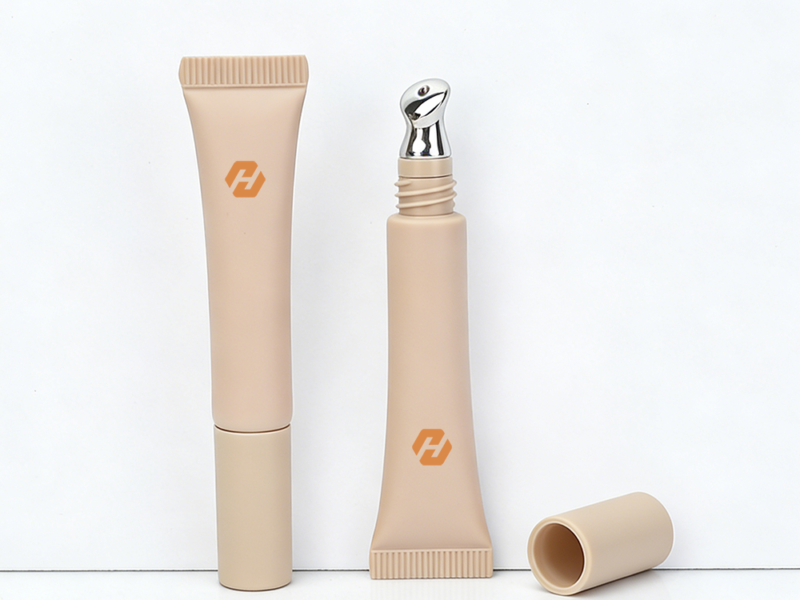
In the 2026 lip care market, the shift toward high-viscosity, gloss-like formulas has made the squeeze tube lip balm format a dominant force. However, for procurement managers, this format presents a unique engineering challenge: the “Pressure Paradox.” Unlike rigid twist-up tubes, a squeeze tube must be flexible enough for effortless dispensing yet robust enough to withstand the rigors of shipping and consumer handling without bursting.
If you are sourcing bulk squeeze tube lip balm, a failure in the sealing interface or material co-extrusion isn’t just a defect—it is a brand-ending liability. This guide breaks down the technical benchmarks required to ensure your inventory remains intact from the factory to the pharmacy shelf.

1. The Engineering of Burst Strength: Mono-layer vs. 5-Layer EVOH
The most common cause of “bursting” in bulk squeeze tube lip balm is inadequate wall construction. When a tube is compressed, the internal hydraulic pressure seeks the weakest point—usually the side seam or the shoulder interface.
- The Technical Standard: For premium formulas, especially those containing essential oils or active ingredients, a 5-layer Co-extruded structure (PE/Tie/EVOH/Tie/PE) is the 2026 industry gold standard.
- The Hyrun Edge: We calibrate our tubes to withstand a Burst Pressure Test of ≥0.3 MPa. By utilizing an EVOH (Ethylene Vinyl Alcohol) barrier layer, we not only prevent oxygen ingress but also enhance the mechanical “rebound” of the tube, ensuring it returns to its original shape after every squeeze without stress cracking.
2. Orifice Precision and “Tail-End” Sealing
A “leaky” tube often isn’t the fault of the cap, but rather a failure in the tail-end sealing process or an incorrectly spec’d orifice diameter.
- Vacuum Leakage Testing: At Hyrun, every batch of best squeeze tube lip balm hardware undergoes a -0.05MPa Vacuum Leakage Test for 5 minutes. If the seal fails to maintain integrity under sub-atmospheric pressure, the batch is rejected.
- The Orifice Factor: For high-viscosity oils, we recommend a calibrated orifice of 1.5mm to 2.0mm. If the orifice is too small, the consumer must apply excessive force, which significantly increases the risk of a “shoulder snap”—where the applicator head detaches from the tube body.
3. Applicator Ergonomics: The Slanted Tip Standard
In 2026, the user experience is defined by the applicator. A squeeze tube lip balm is only as good as its contact point with the skin.
- Material Compatibility: We offer applicators in Medical-Grade TPE (Thermoplastic Elastomer) for a soft-touch feel or Zamac (Zinc Alloy) for a premium cooling effect.
- Surface Tension Control: Our applicators are engineered with a specific surface roughness (Ra) to ensure the balm “breaks” cleanly from the tip, preventing the messy buildup that leads to cap-thread contamination and eventual leaking.
Technical Specifications for Procurement Teams
| Parameter | Standard Quality | Hyrun Export Grade (2026) |
| Material Structure | Mono-layer LDPE | 5-Layer Co-ex (EVOH Barrier) |
| Burst Pressure Tolerance | 0.15 – 0.20 MPa | 0.30 – 0.45 MPa |
| Seal Strength (ASTM F88) | 15N/15mm | 25N/15mm |
| Sustainability | Virgin PE | GRS Certified 30%-50% PCR |
FAQ: High-Volume Sourcing for Squeeze Tubes
Q: Why do some squeeze tubes “yellow” over time in the warehouse?
A: This is usually due to “Oxygen Permeation” or UV degradation. To be considered the best squeeze tube lip balm, the material must include a UV-inhibitor masterbatch. Our 5-layer tubes use an EVOH core that acts as a gas barrier, preserving formula color and potency for up to 24 months.
Q: Can we use PCR (Post-Consumer Recycled) plastic in squeeze tubes without losing strength?
A: Yes. According to current [Global Recycled Standard (GRS) guidelines], a 30% PCR blend maintains nearly 95% of the tensile strength of virgin PE. At Hyrun, we use a “Sandwich” extrusion method where the PCR is placed in the middle layers, ensuring only virgin or food-grade materials touch your formula.
Q: What is the most secure cap type for bulk shipping?
A: For bulk squeeze tube lip balm, we recommend a deep-thread screw cap with an internal “plug seal” (crab-claw design). This provides a mechanical secondary barrier that prevents leaking even if the tube is compressed during air freight.
Industry Standards & References
- Sustainability Standards: Textile Exchange – Global Recycled Standard (GRS) Center
- Technical Testing: ISO 11607 – Packaging for Terminally Sterilized Medical Devices (Standard for Leakage/Seal Integrity)