
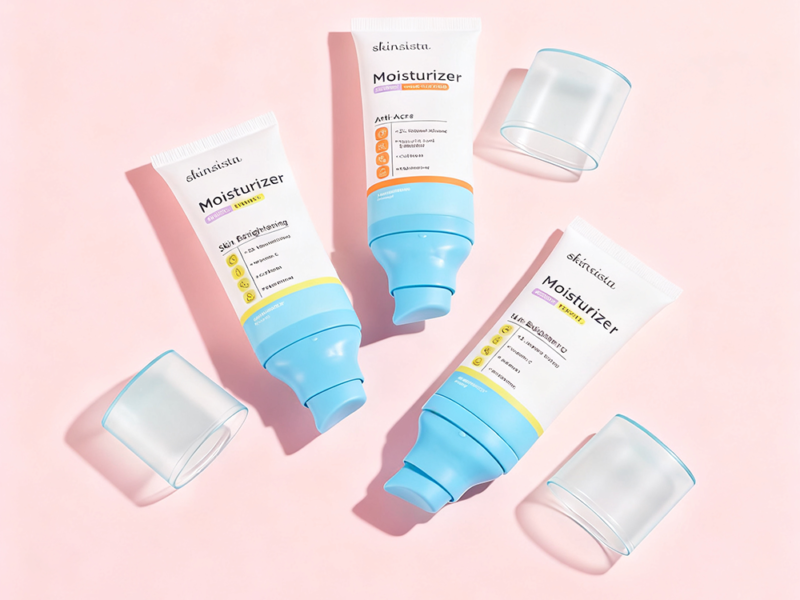
The 50ml capacity is widely considered the “golden standard” for facial sunscreens and travel-sized sun care products. For procurement managers and brand owners, selecting the right 50ml sunscreen tubes involves more than just aesthetics; it requires a deep understanding of material compatibility, barrier technology, and manufacturing tolerances. Sunscreen formulations, often rich in volatile oils and active UV filters, place specific demands on packaging integrity that standard cosmetic tubes cannot always meet.
When sourcing from specialized manufacturers like Hyrun Packaging, technical decision-making starts with the interaction between the formula and the tube’s internal layers.
Material Engineering: Why Barrier Layers Matter for Sun Care
Sunscreen formulas are notoriously “aggressive” compared to standard lotions. The active ingredients—whether chemical filters like Avobenzone or physical blockers like Zinc Oxide—can migrate into the plastic or cause delamination if the tube structure is inadequate.
For a high-performance 50ml sunscreen tube, manufacturers typically offer three primary material structures:
-
PE (Polyethylene) Tubes with EVOH: Standard LDPE or HDPE tubes are often insufficient for sunscreens because they are gas-permeable. Integrating an EVOH (Ethylene Vinyl Alcohol) resin layer acts as a functional barrier against oxygen and fragrance loss, preventing the formula from oxidizing or thinning.
-
ABL (Aluminum Barrier Laminate): This is the industry benchmark for maximum protection. ABL tubes contain a thin layer of aluminum foil sandwiched between plastic layers. This provides a total barrier against light, oxygen, and moisture, which is critical for medical-grade or high-SPF sunscreens.
-
PBL (Plastic Barrier Laminate): Unlike ABL, PBL tubes “spring back” to their original shape after being squeezed. This is ideal for premium branding where the tube must maintain its aesthetic appeal throughout the product’s lifecycle while still offering excellent barrier properties.
Technical Specifications and Dimensions of 50ml Tubes
In the manufacturing world, “50ml” is a volume, but the physical dimensions can vary based on the tube’s diameter. Choosing the right diameter affects both the shelf presence and the user experience.
-
Diameter Options: Common diameters for 50ml tubes are 30mm, 35mm, or 40mm.
-
A 30mm diameter results in a longer, slimmer tube, often preferred for high-end facial sunscreens.
-
A 35mm diameter offers a more “standard” handheld feel and is the most common specification for mass-market 50ml sunscreen tubes.
-
-
Orifice Size: For low-viscosity sun milks, a smaller orifice (1.5mm to 3mm) is required to prevent leakage. Heavier sun creams may utilize a 5mm orifice for easier dispensing.
-
Shoulder Design: The tube shoulder (the part where the cap threads are) must be reinforced to prevent cracking under the high pressure often used when squeezing thicker sunblocks.
Cap Selection and Dispensing Precision
The closure system is the first line of defense against sand, water, and air—elements synonymous with sunscreen use-cases. For 50ml sunscreen tubes, the selection usually falls into three categories:
-
Screw Caps: Simple, cost-effective, and highly secure for travel. However, they can be cumbersome for users to handle with “slippery” sunscreen hands.
-
Flip-Top Caps: The most popular choice for consumer convenience. Manufacturers must ensure the “snap” tension is high enough to pass drop tests, preventing accidental opening in a beach bag.
-
Airless Pump Heads: Increasingly common for premium 50ml facial sunscreens. This system prevents any air contact with the formula, extending shelf life and ensuring precise dosing (typically 0.2ml per pump).
Customization and Decoration for Sun Care Brands
Because 50ml tubes are often used in outdoor environments, the decoration must be durable enough to withstand UV exposure, salt water, and repeated handling.
-
Offset Printing: Best for large-scale production (MOQs of 10,000+) where complex gradients and multi-color designs are required.
-
Silk Screen Printing: Provides a tactile, “raised” feel to the ink. It is highly resistant to the oils found in sunscreen, ensuring the logo doesn’t peel or fade.
-
Hot Stamping: Used for metallic accents (Gold/Silver). For sun care, it is vital to use high-quality foils that do not tarnish when in contact with SPF oils.
-
Matte vs. Glossy Finishes: A matte finish provides a non-slip grip, which is a functional advantage for users with oily hands, while glossy finishes are easier to wipe clean.
The Procurement Workflow: From RFQ to Mass Production
When initiating a transactional request for 50ml sunscreen tubes, a structured OEM/ODM workflow ensures quality consistency. Professional manufacturers like Hyrun follow a rigorous path:
-
Phase 1: Technical Consultation & Sampling. Before mass production, physical samples are sent for “Compatibility Testing.” You must fill the tubes with your specific sunscreen formula and store them at high temperatures (typically 40°C-45°C) for several weeks to check for leakage, discoloration, or delamination.
-
Phase 2: Tooling and Proofing. Once the material is confirmed, digital proofs are converted into printing plates. A pre-production sample (PPS) is generated for color matching (Pantone).
-
Phase 3: Extrusion and Heading. The tube body is extruded, cut to length, and the shoulder (head) is fused onto the body. This joint is the most common point of failure, so high-end factories use automated tension testing here.
-
Phase 4: Printing and Sealing. The tubes are printed, and the tails are typically left open for the brand’s filling facility to seal, or they are pre-sealed if the customer fills through the neck.
-
Phase 5: Quality Inspection (QC). This includes vacuum leak tests, print adhesion tests (the 3M tape test), and dimension verification.
Supply Chain Considerations: MOQ and Lead Times
In the B2B packaging sector, the Minimum Order Quantity (MOQ) for custom-printed 50ml tubes usually ranges from 5,000 to 10,000 units. This is dictated by the setup time required for high-speed printing presses and extrusion lines.
-
Lead Times: Standard production typically takes 25 to 35 days after sample approval. For brands using eco-friendly materials like sugarcane PE or PCR (Post-Consumer Recycled) plastic, lead times may extend slightly due to raw material sourcing.
-
Shipping: Because empty tubes are lightweight but high-volume, shipping costs can be significant. Sourcing from manufacturers with efficient “nested” packing methods can reduce freight costs.
FAQ: Professional Sourcing for 50ml Sunscreen Tubes
Q1: Can 50ml tubes be made from eco-friendly materials without losing barrier properties?
A: Yes. We currently offer Sugarcane PE and PCR (Post-Consumer Recycled) plastics. To maintain the barrier required for sunscreens, we can co-extrude these eco-materials with a virgin EVOH layer, ensuring sustainability doesn’t compromise product shelf life.
Q2: What is the typical MOQ for custom-colored 50ml tubes?
A: For custom tube body colors (e.g., a specific brand blue or yellow), the MOQ is generally 10,000 units. For standard white or transparent tubes with custom printing, some manufacturers may accept 5,000 units.
Q3: How do I ensure the sunscreen formula won’t leak through the flip-top cap?
A: We recommend a “plug-seal” design for the cap. During the RFQ process, please specify your formula’s viscosity. We provide samples for vacuum leakage testing (usually -0.06MPa for 5 minutes) to ensure the seal holds during air travel.
Q4: Do you provide “tail-sealing” services?
A: Most of our clients receive tubes with open tails for filling. However, we can provide pre-sealed tubes if your filling machine injects through the orifice. We also offer various tail-sealing styles, such as straight-grain, curved, or rounded-corner seals with date coding.
Q5: Are these tubes compliant with FDA/REACH standards?
A: Yes. All raw materials used in our sunscreen tubes are food-grade and compliant with FDA and REACH regulations. Certificates of Analysis (COA) and MSDS sheets are provided upon request during the contract phase.
Reference Sources:
-
ISO 9001:2015 – Quality Management Systems for Plastic Packaging Manufacturing.
-
FDA CFR Title 21 – Guidelines on Food and Cosmetic Packaging Safety.
-
ASTM D3475 – Standard Classification of Child-Resistant Packages (Relevant for specialized sun care closures).
-
Technical Whitepaper: “Barrier Properties of EVOH in Multilayer Squeeze Tubes,” Journal of Applied Packaging Research.