
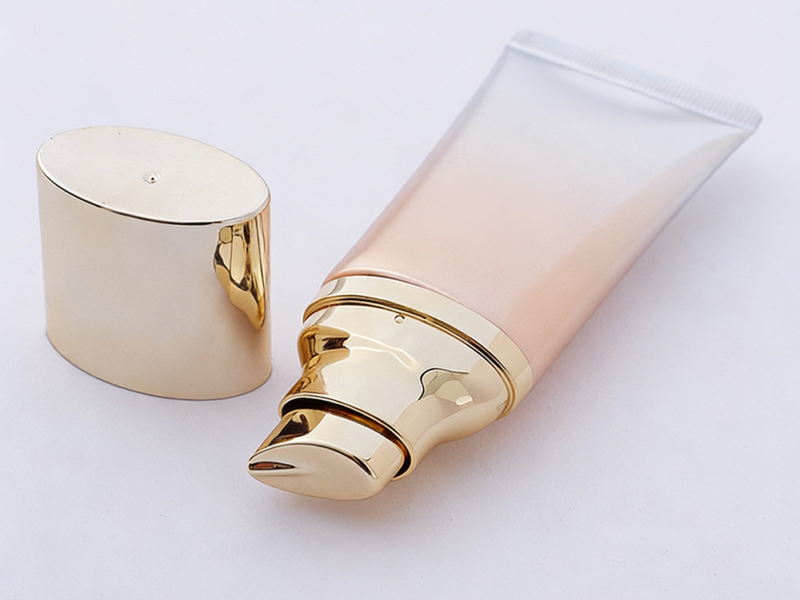
Sunscreen formulations are some of the most aggressive cosmetic products on the market. Active organic filters like avobenzone, oxybenzone, and octocrylene act similarly to industrial solvents once formulated. If a brand attempts to package these chemicals in standard, single-layer polyethylene (PE) tubes, catastrophic packaging failure is virtually guaranteed. The active ingredients will rapidly migrate through the low-density plastic wall, dissolving the packaging from the inside out.
This chemical migration causes structural swelling, commonly referred to in the manufacturing industry as “paneling” or “bloating.” As the solvents penetrate the polymer matrix, they eventually reach the external surface. Once there, they dissolve the adhesives and inks used for external branding, resulting in peeling logos and sticky, ruined tubes.
To prevent this, B2B procurement teams and packaging engineers must prioritize multi-layer co-extrusion technologies. The best sunscreen tube packaging integrates advanced barrier materials to block oxygen ingress and contain volatile SPF chemicals. This level of material engineering is an absolute requirement for passing pharmaceutical stability protocols.
Why Standard Plastics Fail Against UV Filters
Chemical UV filters are engineered to absorb solar radiation, a function that requires highly reactive molecular structures. When these aggressive molecules sit inside standard mono-layer packaging, they initiate rapid polymer degradation. The packaging loses its structural integrity, and the sunscreen formula quickly separates into unmixable oil and water phases.
Physical sunscreens utilizing zinc oxide or titanium dioxide present a completely different manufacturing challenge. These are dense, heavy mineral powders permanently suspended in carrier oils. If the packaging lacks proper barrier layers, these carrier oils will seep outward through the microscopic pores of the plastic wall.
This seepage leaves the mineral powders dry, clustered, and trapped inside the tube. The end user experiences a gritty, unspreadable paste instead of a smooth lotion. A compromised suspension formula directly results in uneven skin application and a drastically reduced SPF protection rating.
Engineers solve these stability issues by implementing multi-layer tube structures. A standard protective configuration involves up to five distinct material layers. This co-extruded structure completely isolates the aggressive formulation, preventing any chemical interaction between the volatile active ingredients and the external environment.
Barrier Material Comparison: ABL, PBL, and 5-Layer PE
Selecting the correct barrier substrate dictates the total shelf life of a sunscreen product. OEM project managers must match the tube’s wall structure to the specific chemical profile of the formulation. The three primary industrial choices in cosmetics manufacturing are ABL, PBL, and 5-Layer co-extruded PE.
ABL (Aluminum Barrier Laminate) features a microscopic layer of aluminum foil sandwiched between inner and outer plastic layers. This aluminum core provides an absolute barrier against oxygen, UV light, and moisture. ABL is historically the standard for highly reactive, pharmaceutical-grade dermatological creams. However, it suffers from a “dead fold” effect, meaning the tube creases and remains deformed after squeezing.
PBL (Plastic Barrier Laminate) replaces the aluminum core with a high-density plastic barrier. PBL maintains exceptional chemical resistance while allowing the tube to retain its original shape after being squeezed. This structural “bounce-back” memory keeps the product looking premium and full on retail shelves.
5-Layer PE tubes rely on an advanced co-extrusion process to build a composite wall. The profile consists of an outer PE layer, a tie-resin layer, a central EVOH (Ethylene Vinyl Alcohol) core, another tie-resin, and an inner PE layer. This sandwich configuration completely isolates the moisture-sensitive EVOH core from the formula’s water content, ensuring the barrier remains impenetrable.
| Material Type | Core Barrier Layer | Shape Memory (Bounce-back) | Ideal Sunscreen Application |
| ABL Tube | Aluminum Foil | Low (Dead fold effect) | Reactive pharmaceutical SPF creams |
| PBL Tube | High-Density Polymer | High | Premium cosmetic retail sunscreens |
| 5-Layer PE | EVOH Copolymer | High | Daily-use SPF body lotions |
Thermal Expansion and Dispensing Pump Integration
Sunscreens are primarily deployed in harsh, high-heat environments like beaches or inside hot vehicles. Extreme ambient temperatures cause the air and liquids inside the tube to experience severe thermal expansion. This expansion creates internal pressure that often leads to unwanted leaking through standard screw-on caps.
To combat high-heat leakage, manufacturing consultants strictly recommend specialized dispensing systems. Upgrading the packaging to a flat PP (Polypropylene) pump or an airless pump prevents thermal expansion leaks. These advanced systems utilize secure one-way valves that prevent internal pressure from forcing the liquid out unpredictably.
Integrating an airless PP pump entirely prevents oxygen exposure during the product’s lifespan. This mechanism is critical for complex, sensitive formulations like SPF-infused makeup primers or BB creams. It ensures highly accurate dosage control and blocks bacterial backflow during outdoor application.
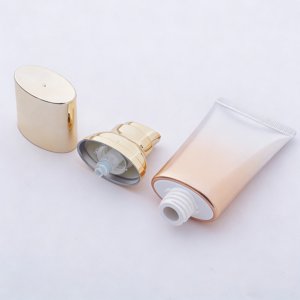
A reliable OEM packaging partner like Hyrun provides precisely tailored dispensing options for high-performance applications. Their custom PE sunscreen tubes routinely feature matching PP pump heads and durable ABS outer caps. These integrated configurations are engineered specifically to withstand the mechanical stress of demanding cosmetic applications.
Airless packaging also guarantees a near-perfect evacuation rate for the consumer. High-viscosity zinc oxide creams notoriously cling to the interior walls of traditional tubes. An airless piston mechanism continuously forces the heavy cream upward, eliminating expensive product waste and improving user satisfaction.
Accelerated Stability Testing Protocols for OTC Compliance
In many global markets, sunscreens are regulated as Over-The-Counter (OTC) drugs rather than standard cosmetics. Therefore, before launching mass production, the custom packaging must undergo rigorous environmental stress testing. Packaging engineers rely on accelerated stability protocols to predict long-term structural failures and ensure strict compliance.
The most critical protocol requires storing filled sunscreen tubes inside an industrial incubator. The temperature is strictly maintained at 45°C for a continuous 12-week period. This accelerated timeline accurately simulates a standard two-year retail shelf life under normal ambient conditions.
During this incubation phase, QA technicians heavily monitor the tubes for weight variance. If a sealed tube loses more than 1% of its total weight, the barrier layer is officially failing. Volatile chemical compounds and moisture are escaping through the plastic matrix as invisible vapor, meaning the packaging must be rejected.
Engineers also conduct Environmental Stress Crack Resistance (ESCR) testing. They apply continuous mechanical pressure to the tube body while it is exposed to aggressive chemical agents. This ensures the crimped tail seal and the threaded pump neck will not fracture or delaminate during commercial shipping and handling.
Evaluating OEM Supplier Capabilities and Procurement Workflows
Sourcing custom packaging requires vetting a factory’s true production floor capabilities and quality management systems. A competent B2B procurement advisor looks far beyond standard unit pricing. They must analyze tooling tolerances, material certifications, testing support, and decoration flexibility.
Production capacity and sizing flexibility are primary indicators of a capable OEM manufacturer. Elite suppliers should offer extensive tooling for tube diameters, typically ranging from 16mm up to 50mm, though 30mm to 35mm are standard for travel-sized sunscreens. They must easily accommodate fill volumes ranging from a 25ml sample size up to a 150g body lotion.
Customization capabilities separate generic wholesale factories from premium manufacturing partners. Top-tier suppliers execute precise custom Pantone color matching directly into the raw plastic resin before extrusion. This produces a vastly superior, scratch-resistant finish compared to simply painting the exterior of a pre-made white tube.
Surface finishing dictates the final retail presentation and perceived value of the product. Standard factory capabilities must include automated silk-screen printing, hot stamping, and offset printing. Premium tactile finishes like matte varnishes, high-gloss UV coatings, and soft-touch rubberized textures provide a significant commercial advantage.
Crucial QA metrics to verify during a supplier audit include:
-
Extrusion layer thickness consistency across the entire tube body.
-
Seal strength, burst tolerance, and delamination resistance of the crimped tube tail.
-
Chemical resistance of external silk-screen UV inks against the specific SPF filters.
-
Compatibility of the PP pump’s internal metal spring with aggressive formula solvents.
Commercial viability also depends heavily on Minimum Order Quantities (MOQ) and production lead times. Reliable cosmetic OEM suppliers typically set custom MOQs between 5,000 and 10,000 pieces per specific design. Standard manufacturing cycles usually require 20 to 30 days from the moment final technical artwork is approved.
Before committing to large-scale mass production, requesting physical pre-production samples is mandatory. Procurement teams must conduct the 12-week accelerated stability test using their actual bulk formulation. This strictly verifies the chemical compatibility between the specific sunscreen and the factory’s co-extruded tube material.
FAQ
What is the standard MOQ for custom multi-layer sunscreen tubes?
Most established packaging manufacturers require a Minimum Order Quantity (MOQ) of 5,000 to 10,000 pieces per design. This volume justifies the extensive machine setup times required for custom Pantone color resin extrusion and multi-pass printing techniques.
Why is an EVOH layer required for chemical sunscreen packaging?
EVOH acts as an impenetrable barrier to oxygen and volatile chemical solvents. It prevents active UV filters from migrating through the plastic, which would otherwise cause the tube to swell structurally and cause the external branding inks to peel off.
Should a brand choose ABL or PBL for a heavy mineral sunscreen?
PBL is generally preferred for heavy mineral sunscreens in the modern retail market. It offers excellent chemical barrier protection while possessing a structural “bounce-back” memory, keeping the tube looking full and pristine on the shelf after repeated squeezing.
Can I use a standard screw cap for an SPF 50 liquid lotion?
Low-viscosity SPF lotions are highly prone to leaking under high-heat outdoor conditions due to thermal expansion. Upgrading to a flat PP pump or an airless dispensing system provides a secure one-way valve, preventing messy spills during travel or beach use.
Reference Sources
-
FDA OTC Regulations for Sunscreen Drug Products (21 CFR Part 352).
-
ISO 22715:2006 – Cosmetics — Packaging and labelling requirements.
-
ASTM D4332 – Standard Practice for Conditioning Containers, Packages, or Packaging Components for Testing.
-
Hyrun Packaging Technical Specifications and Manufacturing Capabilities for Cosmetic Tubes.