
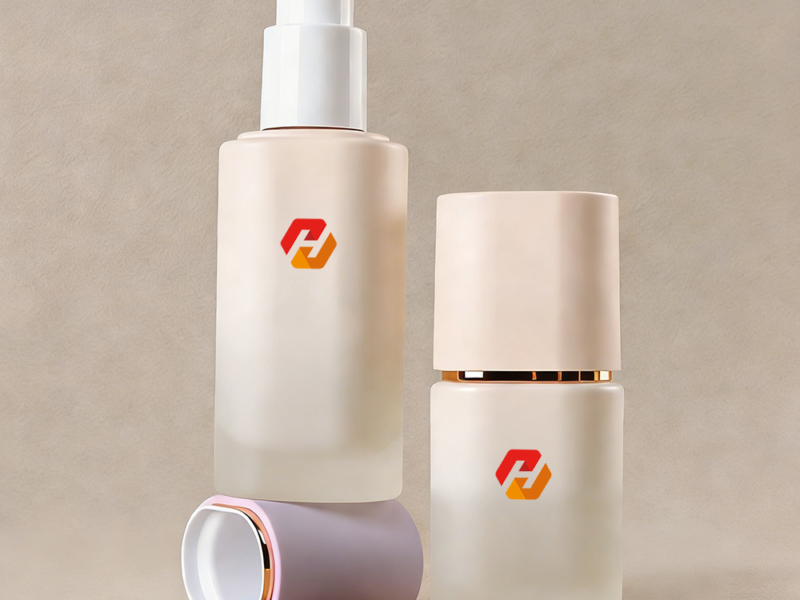
The transition from a laboratory-tested formula to a market-ready beauty product hinges on a single, critical factor: the packaging. For emerging and established brands alike, Original Equipment Manufacturer (OEM) cosmetic packaging is the bridge between chemical engineering and consumer experience.
Choosing the right OEM partner involves more than just selecting a shape. It requires an understanding of polymer science, decorative precision, and supply chain logistics. This guide explores the technical and commercial variables that define successful packaging procurement.
Decoding the OEM Cosmetic Packaging Workflow
In the cosmetic industry, OEM packaging refers to a partnership where a factory produces containers based on specific brand requirements. This process is distinct from ODM, where the supplier also handles the formulation.
The manufacturing lifecycle typically follows a rigorous path:
-
Technical Briefing: Defining the compatibility requirements between the product (pH levels, viscosity) and the container material.
-
Tooling and Prototyping: If a custom shape is required, new steel or aluminum molds are engineered.
-
Pilot Run: A small batch is produced to verify tolerances and leak-proof seals.
-
Mass Production: High-speed injection or blow molding.
-
Secondary Processing: Applying decorations such as UV coating, silk-screen printing, or hot stamping.
Material Engineering: Selecting the Right Substrate
Material selection is the most significant technical decision in the OEM process. It affects the product’s shelf life, the “hand-feel” of the brand, and the overall cost structure.
| Material | Common Use Cases | Key Properties |
| PET (Polyethylene Terephthalate) | Clear lotion bottles, toner containers | High clarity, excellent gas barrier, recyclable. |
| PP (Polypropylene) | Jar liners, dispensing pumps, caps | High chemical resistance, heat tolerance, BPA-free. |
| Acrylic (PMMA) | Luxury cream jars, double-wall bottles | Glass-like aesthetics, heavy weight, premium feel. |
| PE (Polyethylene) | Squeeze tubes for cleansers | Flexible, durable, available in mono-layer or multi-layer. |
For brands focusing on clean beauty, understanding the chemical resistance of these materials is vital. For instance, formulas with high concentrations of essential oils may degrade certain plastics, necessitating the use of specialized cosmetic bottles with inner liners.
Primary Packaging Categories and Their Applications
Effective OEM sourcing requires matching the dispensing mechanism to the product’s rheology.
1. High-Performance Cosmetic Tubes
Tubes remain the standard for cleansers, hand creams, and sunscreens. Modern cosmetic tubes utilize ABL (Aluminum Barrier Laminate) or PBL (Plastic Barrier Laminate) technology. ABL is particularly effective for products sensitive to oxygen and light.
2. Precision Cosmetic Bottles
The rise of active ingredients has driven the demand for airless bottle systems. Unlike standard dip-tube pumps, airless bottles use a vacuum piston to dispense the product. This prevents oxidation and allows for nearly 100% product evacuation.
3. Skincare Jars for Luxury and Utility
Cosmetic jars are the go-to for high-viscosity creams and masks. In the OEM sector, double-wall jars are a popular choice to create a “prestige” look. An inner PP cup holds the product for safety, while an outer shell provides aesthetic volume.
Customization and Decorative Technologies
In a saturated market, decoration is where a brand differentiates itself. OEM suppliers offer several technical finishes:
-
Silk Screen Printing: Best for bold, solid colors and tactile logos.
-
Hot Stamping: Uses heat and foil to create metallic finishes like gold or silver.
-
Water Transfer Printing: Allows for complex patterns to be applied to 3D shapes.
-
UV Coating/Electroplating: Gives plastic components a high-gloss finish.
When planning these finishes, engineers must account for registration. High-quality OEM partners maintain tight tolerances to ensure that prints do not drift during high-speed production.
Navigating Sourcing Challenges: MOQs and Lead Times
The commercial aspect of OEM packaging often centers on the Minimum Order Quantity (MOQ). MOQs exist because of the set-up cost involved in calibrating machinery.
-
Stock Mold MOQs: Usually lower (3,000 to 5,000 units), as the factory already owns the tooling.
-
Custom Mold MOQs: Often higher (10,000+ units), requiring a significant upfront investment in Capital Expenditure.
Standard production typically takes 30–45 days. However, if custom molds are required, add 25–30 days for mold fabrication and testing. Brands should always factor in a buffer for transit and customs clearance.
Evaluating the Financial Impact: Tooling vs. Stock Molds
A common mistake for growing brands is over-investing in custom shapes too early.
-
Stock Molds: Brands can achieve a unique look through custom colors and high-end printing without the
5,000–15,000 cost of a new mold.
-
Custom Molds: Essential for signature packaging that becomes part of the brand’s Intellectual Property.
Why Partnership Quality Trumps Unit Price
In B2B packaging procurement, the cheapest unit price often hides invisible costs. A reliable OEM partner should provide:
-
Leakage Testing: Vacuum testing to ensure seals hold under pressure changes.
-
Compatibility Testing: Assessing how the formula reacts with the plastic over 6 to 12 months.
-
Compliance Support: Providing material safety data sheets and ensuring materials meet FDA or REACH standards.
Summary
Successful OEM cosmetic packaging requires a balance of material science, aesthetic customization, and logistical planning. By understanding the manufacturing workflow and selecting the right substrate, brands can protect their formulas while enhancing their market presence. Priority should always be placed on compatibility and quality assurance over initial unit costs.
FAQ
1. What is the difference between OEM and ODM packaging?
OEM involves manufacturing based on the brand’s specifications or using existing factory molds with custom decorations. ODM includes the supplier creating both the formula and the packaging design for the brand.
2. How do I ensure formula compatibility with plastic?
Always request compatibility testing samples. Place your formula in the container and subject it to accelerated aging tests to check for plastic cracking or formula separation.
3. Why are MOQs so high for customized colors?
Changing colors requires a machine purge to clean out previous resin. This process consumes significant time and material, making small runs financially unviable for factories.
4. Can OEM packaging be eco-friendly?
Yes, most suppliers now offer Post-Consumer Recycled (PCR) plastics or bio-plastics. Brands can also choose mono-material designs to simplify the recycling process for consumers.
Reference Sources
ISO 22716: Cosmetics Good Manufacturing Practices Guide
FDA Cosmetics Labeling and Packaging Regulations