
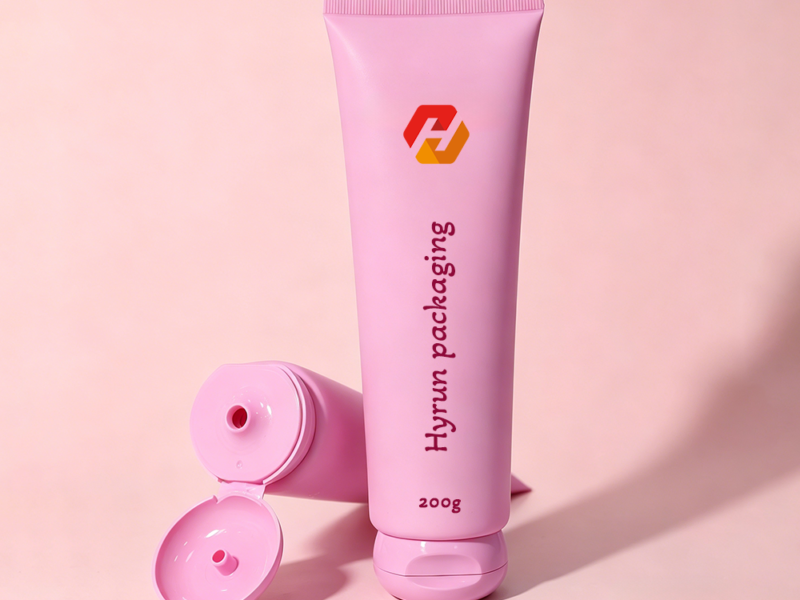
Selecting a skincare packaging OEM partner is a critical decision that bridges the gap between chemical formulation and consumer experience. In the high-stakes beauty industry, the packaging must perform two roles: protecting the integrity of active ingredients and communicating brand authority.
For brands evaluating manufacturing partners, understanding the technical nuances of tube construction, barrier properties, and decoration methods is essential. This guide analyzes the OEM/ODM landscape specifically for skincare tube packaging.
Understanding the OEM vs. ODM Framework in Skincare Packaging
When engaging with a manufacturer like Hyrun Packaging, brands usually operate within two primary service models.
OEM (Original Equipment Manufacturer) involves a “manufacture-to-print” approach. The brand provides specific technical drawings, dimensions, and material requirements. The manufacturer focuses on precision execution, quality control, and scalable production. This is ideal for established brands with in-house design teams.
ODM (Original Design Manufacturer) offers a more collaborative “concept-to-shelf” solution. The manufacturer provides pre-existing molds and structural designs that the brand can customize with unique colors, finishes, and branding. This significantly reduces tooling costs and shortens the time-to-market for startups or new product lines.
Material Science: Choosing the Right Barrier for Your Formula
The choice of material is not merely aesthetic; it is a functional requirement based on the product’s chemistry. Skincare formulas containing volatile oils, Vitamin C, or retinol require specific barrier protections to prevent oxidation and ingredient degradation.
| Material Type | Barrier Level | Common Applications | Key Characteristics |
| PE (Polyethylene) | Standard | Cleansers, Hand Creams | Flexible, soft-touch, recyclable. |
| ABL (Aluminum Barrier Laminate) | Superior | Medicated creams, Actives | High light and oxygen barrier; retains shape. |
| PBL (Plastic Barrier Laminate) | High | Sunscreens, Moisturizers | Maintains tube shape after squeezing; excellent printing. |
| PCR (Post-Consumer Recycled) | Variable | Sustainable skincare lines | Eco-friendly; can be blended with PE. |
Standard PE tubes are often preferred for daily-use cleansers due to their durability and cost-efficiency. However, for high-end serums, cosmetic tubes utilizing ABL technology are necessary to ensure the formula remains stable throughout its shelf life.
The Technical Workflow of Skincare Tube Manufacturing
A professional OEM project follows a structured manufacturing sequence. Understanding this process helps procurement managers identify potential lead-time bottlenecks.
-
Extrusion or Lamination: Raw resin pellets are melted and formed into continuous sleeves (for PE) or flat sheets are laminated (for ABL/PBL).
-
Heading: The tube “head” or shoulder is injected onto the sleeve. This is where the orifice and thread type (screw or flip-top) are established.
-
Surface Treatment & Decoration: This is the most complex stage. Techniques include:
-
Offset Printing: Best for large volumes and complex gradients.
-
Silk Screen Printing: Provides a tactile, raised ink feel with high color vibrance.
-
Hot Stamping: Adds metallic foils (gold, silver) for a premium aesthetic.
-
-
Capping & Sealing: The specified closure is applied. In many OEM workflows, the tube is shipped “open-ended” so the brand’s filling facility can fill from the bottom and tail-seal after.
Customization and Component Engineering
Modern skincare packaging OEM services extend beyond the tube body to the “applicator” or head design. The functional delivery of the product can be a unique selling proposition (USP) for a brand.
Brands are increasingly moving toward specialized delivery systems. For eye creams, zinc alloy cooling tips or rollerball applicators are integrated directly into the tube head. For high-viscosity masks, brush-tip applicators allow for mess-free application.
When reviewing Hyrun’s product category, it is evident that diameter options (ranging from 13mm to 60mm) and capacity variations (3ml to 500ml) provide the technical flexibility needed for everything from travel-sized samples to professional-sized salon products.
Critical Commercial Evaluation Factors
When transitioning from technical evaluation to commercial procurement, three factors dictate the success of an OEM partnership:
Minimum Order Quantities (MOQ):
In the packaging industry, MOQs are driven by machine setup times. For custom-colored tubes with complex printing, MOQs typically range from 5,000 to 10,000 units. Smaller runs may be possible for stock components with simple labels.
Lead Times and Prototyping:
Initial sampling usually takes 7–14 days. Once the “Golden Sample” is approved, mass production generally requires 25–35 days. Brands must account for shipping and customs when planning product launches.
Regulatory Compliance and Testing:
Reliable OEMs provide documentation for material safety (BPA-free, REACH compliance) and compatibility testing. It is standard practice to perform “leakage tests” and “vacuum tests” to ensure the packaging survives pressurized environments during air freight.
Sustainability in Skincare Packaging
The shift toward the circular economy has made PCR (Post-Consumer Recycled) plastic and Mono-material tubes a requirement for many retailers. A sophisticated OEM partner will offer “Green” solutions, such as Sugarcane PE or OWP (Ocean Waste Plastic).
While PCR materials may have slight color variations compared to virgin plastic, they significantly enhance a brand’s ESG (Environmental, Social, and Governance) profile. Engineering a 100% recyclable mono-material tube—where the cap, head, and sleeve are all made from the same resin family—is currently the gold standard in sustainable skincare design.
FAQ
What is the difference between PE and ABL tubes in skincare?
PE (Polyethylene) tubes are fully plastic and highly flexible, making them suitable for most moisturizers. ABL (Aluminum Barrier Laminate) tubes contain a thin layer of aluminum, providing an airtight barrier that protects sensitive ingredients like Retinol from light and oxygen.
Can I get custom colors for my skincare tubes?
Yes. In an OEM model, manufacturers can match specific Pantone colors by mixing pigments into the raw resin (color-in-mold) or through full-surface spray coating and printing.
How do I ensure my formula won’t react with the plastic packaging?
Professional manufacturers conduct “Compatibility Testing.” This involves placing the formula inside the tube for an extended period at various temperatures to check for delamination, discoloration, or chemical leaching.
What are the common printing methods for high-end skincare?
For a premium look, brands often combine silk screen printing (for brand name texture) with hot stamping (for metallic accents) and a matte or high-gloss UV varnish finish.
What is the standard MOQ for custom skincare tubes?
Most OEM suppliers require a minimum of 5,000 to 10,000 pieces per SKU, depending on the complexity of the decoration and the tube diameter.
Reference Sources
-
ISO 15378:2017 – Primary packaging materials for medicinal products (Quality management systems).
-
ASTM D3475 – Standard Classification of Child-Resistant Packages.
-
Sustainable Packaging Coalition (SPC) – Guidelines on PCR integration in cosmetic packaging.
-
Cosmetics Europe – Guidelines on Cosmetic Product Packaging and Stability Testing.
-
Technical Data Sheets (TDS) for Polyethylene and Laminate structures provided by global resin suppliers.