
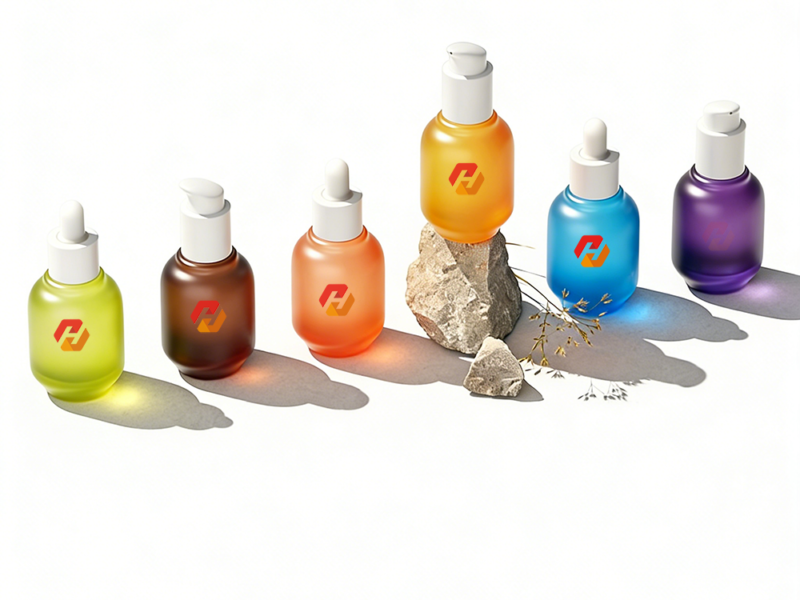
For small businesses transitioning from handmade batches to professional-scale production, the choice of primary packaging is one of the most critical technical and financial decisions. It is not merely about aesthetics; the vessel must protect the formula’s integrity, ensure consumer safety, and remain economically viable at wholesale volumes.
Selecting the right partner for cosmetic packaging wholesale requires a deep understanding of material compatibility, manufacturing lead times, and the engineering behind dispensing systems.
Navigating Material Compatibility: Why Your Formula Dictates Your Packaging
The chemical composition of your product—whether it is an oil-based serum, a high-viscosity cream, or a pH-sensitive toner—determines the necessary barrier properties of your packaging. Selecting a material based solely on appearance can lead to product degradation, oxidation, or “leeching,” where the packaging interacts negatively with the formula.
Common Wholesale Materials and Their Industrial Applications:
PET (Polyethylene Terephthalate): Highly transparent and lightweight. Ideal for toners and cleansers. It offers excellent moisture barriers but can be sensitive to essential oils at high concentrations.
PP (Polypropylene): A “workhorse” plastic in the industry. It has high chemical resistance and is often used for jar liners and closures.
Glass: The gold standard for luxury and inertness. It is non-reactive, making it the best choice for high-potency active ingredients that are prone to oxidation.
PCR (Post-Consumer Recycled) Plastics: Increasingly requested for sustainable branding. These materials maintain technical performance while reducing the carbon footprint of the production cycle.
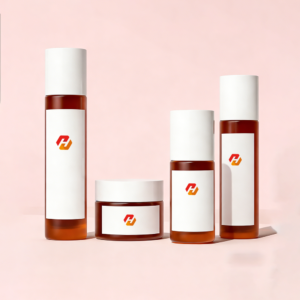
Comparing Primary Packaging Formats: Bottles, Jars, and Tubes
Small businesses must balance user experience with production efficiency. Each format serves a specific viscosity and application method.
| Packaging Type | Best For | Technical Advantage | Typical Decoration Options |
| Cosmetic Bottles | Serums, Lotions, Oils | Precision dispensing (pumps/sprayers) | Silk screening, Hot stamping |
| Cosmetic Jars | Creams, Balms, Masks | High-viscosity access; luxury feel | Froasting, Color injection |
| Cosmetic Tubes | Gels, Ointments, Travel sizes | Air-tight, portable, cost-effective | Offset printing, Flexography |
The Engineering of Dispensing
For small businesses, the functionality of the pump or sprayer is as important as the bottle itself. Cosmetic bottles often utilize airless technology—a vacuum-based system that eliminates the need for a dip tube. This technology is essential for “clean beauty” brands that use fewer preservatives, as it prevents air exposure and extends shelf life.
The Economics of Cosmetic Packaging Wholesale: Balancing MOQ and Unit Cost
In the wholesale landscape, the Minimum Order Quantity (MOQ) is the primary hurdle for small businesses. Manufacturing logic dictates that higher volumes reduce unit costs because setup times for injection molding or silk screening are amortized over more units.
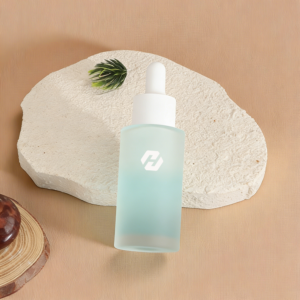
Cost Drivers in Wholesale Procurement:
Tooling Costs: If you require a custom shape, you must invest in a mold. Most small businesses should start with “stock packaging”—pre-existing molds that allow for lower MOQs.
Decoration Complexity: Every color in a logo and every pass of a silk screen adds to the unit price. For startups, using high-quality labels on stock cosmetic jars is often more cost-effective than direct printing for the first 5,000 units.
Lead Times: Sourcing domestically often results in higher unit costs but lower shipping fees and faster turnaround. Overseas wholesale sourcing offers significant price breaks but requires 8–12 week lead times.
Technical Checklist for Small Business Procurement
Before finalizing a wholesale contract, an OEM project manager would typically verify the following technical specifications:
Neck Finish Compatibility: Ensure that the bottle neck (e.g., 20/410 or 24/410) matches the pump or cap precisely to prevent leakage during transit.
Overflow Capacity: This is the actual volume a container holds when filled to the brim. Always test your fill weight against the overflow capacity to ensure there is enough “headspace” for thermal expansion.
Wall Thickness: In cosmetic tubes, the number of layers (2-layer vs. 5-layer EVOH) determines the oxygen barrier. Five-layer tubes are necessary for formulas containing volatile ingredients.
Weight & Feel: For jars, the difference between a single-wall and double-wall construction significantly affects the consumer’s perception of luxury and “heft.”
Optimizing Your Supply Chain for Growth
For a small business to scale, the packaging supplier must act as a manufacturing consultant. This involves more than just shipping boxes; it includes providing technical drawings, ensuring compliance with international safety standards (such as ISO or FDA regulations), and offering scalable customization options.
When evaluating a wholesale partner like Hyrun Packaging, look for their ability to provide integrated solutions across different categories. Having a single source for your bottles, jars, and tubes ensures consistency in color matching and simplifies the logistics of your production runs.
FAQ
Q: What is the typical MOQ for wholesale cosmetic packaging?
A: For stock items (unlabeled), MOQs can range from 1,000 to 5,000 units. For custom-colored plastics or unique mold shapes, MOQs typically start at 10,000 units due to the machine setup required for injection molding.
Q: How do I ensure my formula won’t react with the plastic packaging?
A: You should always conduct a “Compatibility and Stability Test.” Place your formula in the selected packaging and subject it to accelerated aging (high temperature/humidity) for 4–12 weeks to check for separation, discoloration, or packaging deformation.
Q: Can I get custom colors for small wholesale orders?
A: Most manufacturers achieve color through “masterbatch” injection. While a custom Pantone match usually requires a higher MOQ, many wholesalers offer a range of standard colors (white, black, clear, amber) that are available at lower volumes.
Q: What are the best packaging options for preservative-free products?
A: Airless pump bottles are the industry standard for preservative-free or natural formulas. The vacuum seal prevents oxygen and microbial contamination from entering the container during use.
Reference Sources
ISO 22716: Good Manufacturing Practices (GMP) for Cosmetics
FDA Packaging & Labeling Guide: Regulations for cosmetic container safety and labeling requirements
Sustainable Packaging Coalition (SPC): Resources for PCR and recyclable material standards in the beauty industry.
ASTM D3475: Standard Classification of Child-Resistant Packages, relevant for certain active-ingredient skincare products.