
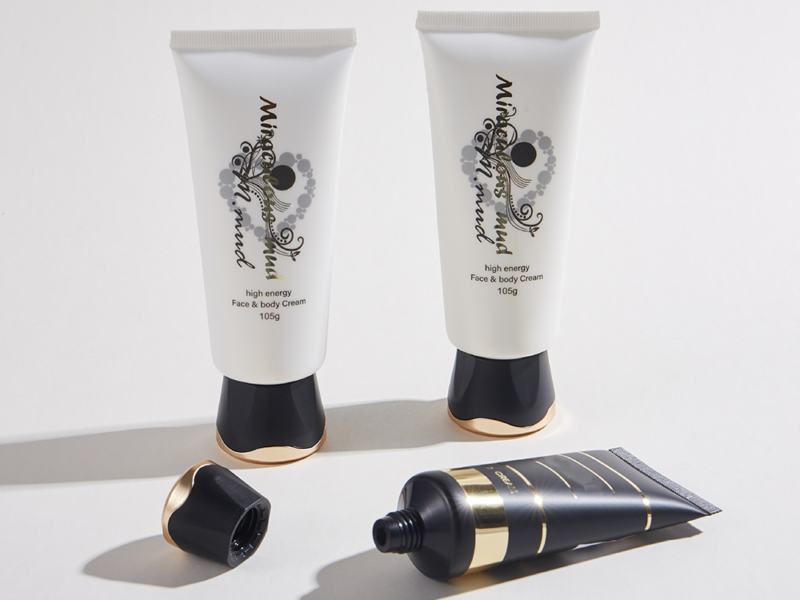
Selecting a primary packaging partner is a critical decision that influences product shelf-life, brand perception, and supply chain agility. For procurement managers and brand owners, the search for a cosmetic tubes manufacturer goes beyond finding the lowest unit price; it requires a deep dive into material science, barrier engineering, and decorative tolerances.
In the current cosmetic landscape, the shift toward sustainable resins like PCR (Post-Consumer Recycled) and bio-based PE has added layers of complexity to the manufacturing process. This guide breaks down the technical benchmarks and manufacturing workflows necessary to vet a high-tier production partner.
Material Engineering: Selecting the Right Substrate for Your Formula
The chemical compatibility between your formulation and the tube material is the first point of failure in cosmetic packaging. A competent manufacturer should offer a spectrum of materials tailored to specific barrier requirements.
PE (Polyethylene) Tubes: Available in LDPE (Low Density), HDPE (High Density), and Soft Touch varieties. These are the industry standard for cleansers and basic moisturizers.
ABL (Aluminum Barrier Laminate): These tubes feature a thin layer of aluminum sandwiched between plastic. They provide the highest barrier against oxygen, light, and moisture, making them essential for formulas containing active ingredients like Vitamin C or Retinol.
PBL (Plastic Barrier Laminate): Utilizing EVOH (Ethylene Vinyl Alcohol) as the barrier layer, PBL tubes offer excellent “bounce-back” properties, ensuring the tube retains its shape after squeezing, which is vital for premium brand aesthetics.
Sustainable Alternatives: Leading manufacturers like Hyrun now prioritize PCR-PE and Sugarcane-based PE. These materials reduce the carbon footprint without compromising the physical integrity of the packaging.
Comparative Analysis: ABL vs. PBL vs. Mono-layer PE
When evaluating a cosmetic tubes manufacturer, use the following technical comparison to align their capabilities with your product needs:
| Feature | Mono-layer PE | ABL (Laminate) | PBL (Laminate) |
| Oxygen Barrier | Moderate | Excellent (Total Block) | High (with EVOH) |
| Shape Retention | High | Low (Dead-fold) | Excellent |
| Decoration Options | Limited | High (Metallic finish) | Highest (Digital/Flexo) |
| Recyclability | High | Low (Difficult to separate) | Moderate to High |
| Typical Application | Mass Market Cleansers | Medicated/Active Creams | Premium Cosmetics |
Structural Design and Functional Head Styles
The functionality of a cosmetic tube is defined by its orifice and closure system. A versatile manufacturer should provide a range of diameters—typically from 13mm for lip balms to 60mm for body scrubs—and various head styles.
Advanced manufacturing capabilities allow for:
Airless Pump Tubes: Essential for preservative-free or highly sensitive formulas to prevent oxidation.
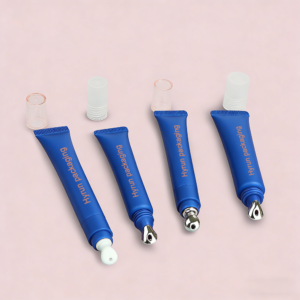
Applicator Tips: Including ceramic or zinc alloy “cool-tip” applicators for eye creams, and silicone brush heads for targeted treatments.
Nozzle Varieties: Long-nozzle tubes for precision dispensing or flip-top caps for high-frequency use products like sunscreens.
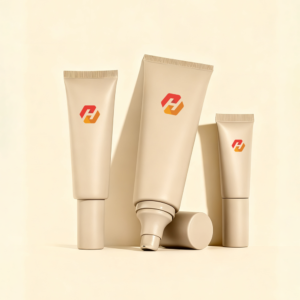
Hyrun’s product range exemplifies this versatility, offering diverse tube shapes (round, oval, and flat) and closure systems that cater to both pharmaceutical-grade and retail-focused cosmetics.
Decoration and Finishing Tolerances
In the B2B procurement cycle, “quality” is measured by registration accuracy and ink adhesion. A professional manufacturer must demonstrate mastery over multiple decoration technologies:
Offset Printing: Best for high-volume runs with up to 6–8 colors.
Silk Screen Printing: Provides a tactile, raised ink feel, ideal for luxury branding.
Hot Stamping: Utilizes heat and pressure to apply metallic foils. Inquire about their “foil-stamping registration” to ensure precise alignment.
Labeling: When complex gradients or ultra-high-resolution imagery is required, automated labeling on the tube line is the most efficient path.
Quality Assurance and Compliance Standards
A manufacturer is only as reliable as their QC (Quality Control) protocol. For the cosmetics industry, where leakage or contamination can lead to costly recalls, look for the following “EEAT” (Experience, Expertise, Authoritativeness, Trustworthiness) markers:
ISO 9001:2015 Certification: Ensures a standardized quality management system.
Vacuum Leak Testing: The manufacturer should perform rigorous vacuum tests on the tail-sealing and cap-fitting to ensure zero leakage during transit or use.
Color Consistency: Ask for their Delta E (ΔE) tolerance levels. A high-end manufacturer usually maintains a ΔE < 2.0 to ensure brand consistency across production batches.
BPA and Phthalate Free: Verification that all resins and masterbatches comply with global safety standards (FDA, REACH, or EU cosmetic regulations).
The Procurement Workflow: From RFQ to Mass Production
Effective communication with a cosmetic tubes manufacturer requires a structured approach to the Request for Quote (RFQ). To accelerate lead times, your brief should include:
Tube Dimensions: Diameter (mm) x Length (mm) or Capacity (ml).
Material Specification: (e.g., 2-layer PE, 5-layer EVOH, or PCR-PE).
Cap Type: (Screw cap, Flip-top, Octagonal, Disc-top).
Decoration Requirements: (Number of colors, presence of foil).
MOQ (Minimum Order Quantity): Usually ranges from 5,000 to 20,000 units depending on the complexity and customization level.
Why Choose a Specialized Partner?
Choosing a manufacturer like Hyrun allows brands to leverage integrated supply chain benefits. From the initial 3D design phase and rapid prototyping to the final high-speed extrusion and decoration, a specialized partner mitigates the risks of component mismatch (e.g., a cap that doesn’t torque correctly onto the tube shoulder).
FAQ: Cosmetic Tube Manufacturing & Procurement
What is the standard lead time for custom cosmetic tubes?
Generally, lead times range from 25 to 35 days after sample approval. This includes the time for material extrusion, printing, and secondary processes like head fitting and capping.
Can I get PCR (Post-Consumer Recycled) materials in any color?
While PCR-PE can be dyed, it often has a slightly “grayer” or “speckled” base compared to virgin resin. Experienced manufacturers can adjust color masterbatches to achieve high-fidelity brand colors even with 50% or 100% PCR content.
How do I ensure the tube orifice is correct for my product’s viscosity?
You should provide your formulation’s viscosity (in centipoise/cP) to the manufacturer. They will recommend an orifice diameter—typically between 1.5mm for thin liquids and 5mm+ for thick scrubs—to ensure optimal dispensing pressure.
What are the MOQ requirements for custom-shaped tubes?
For standard round tubes, MOQs may be lower (approx. 5,000–10,000). For custom shapes (oval or flat) or proprietary head designs that require new tooling, MOQs typically start at 20,000 units to offset the mold costs.
Do manufacturers provide “unsealed” tubes for bottom-filling?
Yes, most tubes are shipped “open-end” (unsealed) for brands that fill from the bottom and then use a heat-sealer or ultrasonic sealer. Alternatively, for top-filling, the manufacturer can provide pre-sealed tails and loose caps.
Reference Sources:
ISO 9001:2015 Quality Management Systems – Requirements.
ASTM D1335-17: Standard Test Method for Tuft Bind of Pile Floor Coverings (Comparative for Adhesion).
Sustainable Packaging Coalition: Recyclability of PE and Laminate Tubes.
SGS Cosmetics & Personal Care Testing Services.