
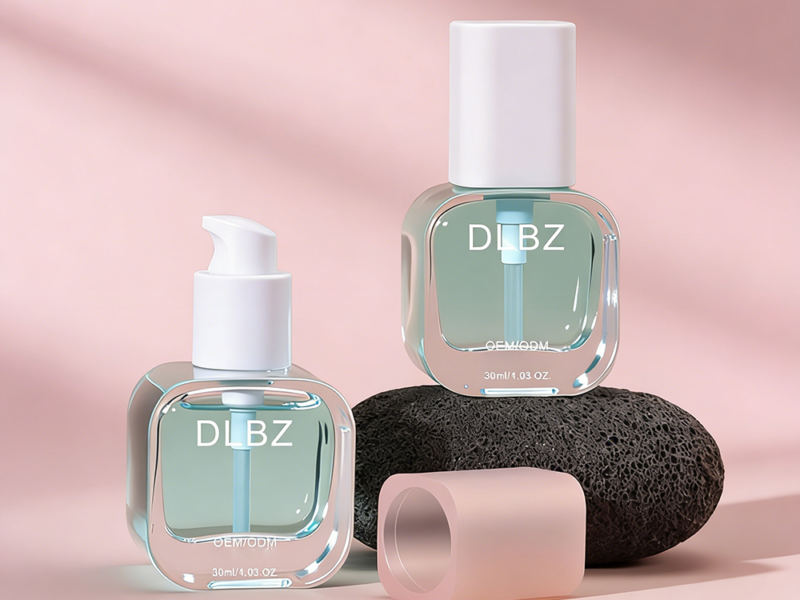
The shift toward preservative-free and high-potency skincare formulations has transformed the airless pump bottle from a luxury aesthetic choice into a technical necessity. Unlike traditional dip-tube pumps, airless systems rely on a vacuum mechanism to dispense product, ensuring that sensitive ingredients like Vitamin C, Retinol, and organic extracts remain stable by preventing oxidation.
For procurement managers and brand owners, choosing the right airless pump bottles supplier involves more than comparing unit prices. It requires a deep dive into mechanical tolerances, material science, and the supplier’s ability to maintain vacuum integrity across high-volume production runs.
How Airless Packaging Protects Formulation Integrity
The fundamental “What” behind airless technology is the elimination of the atmospheric gap. In a standard pump, air enters the bottle to replace the dispensed liquid, introducing oxygen and potential contaminants. An airless system utilizes either a piston or a collapsible pouch mechanism. As the pump is actuated, a vacuum is created, pulling the internal piston upward or compressing the pouch.
This design offers three critical advantages for cosmetic brands:
Oxidation Prevention: By maintaining a zero-air environment, the shelf life of active ingredients is extended by up to 15-20% compared to open-jar or standard pump systems.
99% Evacuation Rate: High-viscosity creams often get stuck in the corners of traditional bottles. Airless systems ensure nearly 100% of the product is utilized, increasing consumer perceived value.
360-Degree Dispensing: Because these systems do not rely on gravity or a dip tube, they can dispense product from any angle—even upside down—which is a major selling point for premium sunscreens and body lotions.
Material Selection: Matching Polymer to Formula
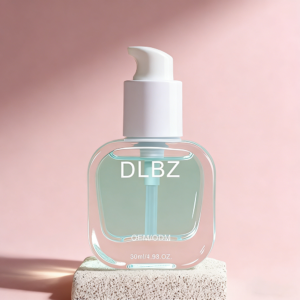
A professional airless pump bottles supplier should offer a range of materials tailored to specific chemical compatibilities. Selecting the wrong polymer can lead to “crazing” (stress cracking) or product leaching.
| Material | Transparency | Chemical Resistance | Best For |
| PP (Polypropylene) | Translucent/Opaque | High | Natural skincare, high-pH formulas |
| PETG | High Clarity | Medium | Serums, oils, luxury aesthetics |
| Acrylic (PMMA) | Glass-like | Low/Medium | High-end luxury, outer-shell aesthetics |
| PCR (Post-Consumer Recycled) | Variable | Medium | Eco-conscious brands, ESG compliance |
| Aluminum | Opaque | Very High | Premium, light-sensitive medical-grade formulas |
Packaging engineers often recommend PP for the internal engine (the parts touching the formula) due to its inert nature, while using Acrylic or PETG for the outer bottle to achieve a premium “glass” look without the weight or fragility.
Technical Evaluation of an Airless Pump Bottles Supplier
When moving into the commercial phase of sourcing, your RFQ (Request for Quote) should look beyond the MOQ (Minimum Order Quantity). You must evaluate the supplier’s engineering rigors.
Vacuum Leak Testing Standards
A reputable supplier must conduct vacuum chamber tests to ensure the seal holds under pressure changes (essential for air travel and global shipping). Ask if they perform “leakage tests” at 0.05MPa for at least 5 minutes.
Actuation Force and Dosage Consistency
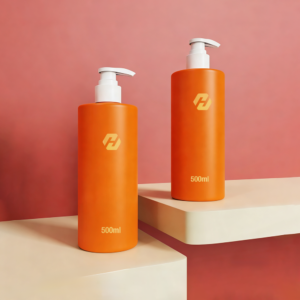
Consistency is key to the user experience. The “prime” (the number of pumps required to get the first drop) should ideally be between 3 to 7 strokes. Furthermore, the dosage per stroke—commonly 0.2ml, 0.25ml, or 0.5ml—must have a tolerance of less than +/- 10%.
Decorating and Customization Capabilities
In the B2B cosmetic space, the bottle is the brand. Evaluate if the supplier provides in-house:
Silk Screening: For tactile, durable labeling.
Hot Stamping: For metallic gold/silver accents.
UV Coating: To protect the bottle from scratches and provide a premium gloss or matte finish.
Color Matching: Capability to match specific Pantone references in the plastic resin itself rather than just surface painting.
Navigating the Procurement Workflow
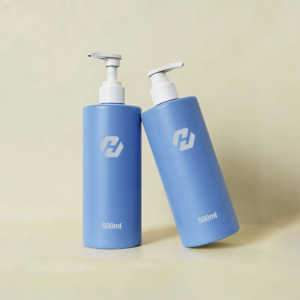
For brands looking to scale, sourcing from a specialized provider like Hyrun Packaging provides access to a diverse catalog ranging from dual-chamber airless bottles to eco-friendly PCR options.
The typical procurement lifecycle for custom airless packaging follows this trajectory:
Compatibility Testing (4-8 weeks): This is the most critical step. You must fill the supplier’s samples with your actual formula to check for reactions, weight loss, or pump failure over time.
Tooling and Prototyping: If a custom shape is required, new molds are cut.
Mass Production (30-45 days): Standard lead times for 10,000+ units.
Quality Inspection: Verification of color consistency, print adhesion (via 3M tape test), and vacuum functionality.
Sustainability and the Future of Airless Sourcing
The industry is moving away from complex, multi-material pumps that are difficult to recycle. Modern suppliers are now focusing on “Metal-Free” pumps (removing the stainless steel spring) and mono-material designs. If your brand identifies as “Clean Beauty,” your sourcing strategy should prioritize suppliers who can offer GRS (Global Recycled Standard) certified PCR materials or refillable airless systems, where the inner cartridge is replaced while the outer bottle is retained.
FAQ: Essential Procurement Insights
Q: Why is the piston in my airless bottle not moving?
A: Usually, this is due to “priming” issues or viscosity mismatch. If the formula is too thin, it may leak past the piston; if the bottle wasn’t filled to the top (leaving too much head-air), the vacuum may struggle to initiate. Ensure your filling line is calibrated to the supplier’s recommended fill volume.
Q: What is the standard MOQ for custom airless pump bottles?
A: For wholesale or stock colors, MOQs can be as low as 1,000–3,000 units. However, for custom-colored resins or specialized decorations, most industrial suppliers require 5,000 to 10,000 units to offset the setup costs of the injection molding machines.
Q: Can airless bottles be reused or refilled?
A: Generally, standard piston airless bottles are designed for single use because the piston is difficult to reset without specialized tools and hygiene cannot be guaranteed. However, “Refillable Airless” systems are a specific product category where an inner thin-walled bottle is replaced, which is a growing trend in sustainable packaging.
Q: How do I know if my formula is compatible with PP vs. PETG?
A: Formulas with high concentrations of essential oils or certain solvents can cause PETG to crack. Always request a “Compatibility Report” from your lab or perform a 45°C accelerated aging test with the supplier’s samples for at least 4 weeks.
Reference Sources
ISO 22715: Cosmetics — Packaging and labelling standards for safety and compliance.
ASTM D3078: Standard Test Method for Determination of Leaks in Flexible Packaging by Bubble Emission.
Sustainable Packaging Coalition (SPC): Guidelines on the recyclability of multi-material dispensing systems.