
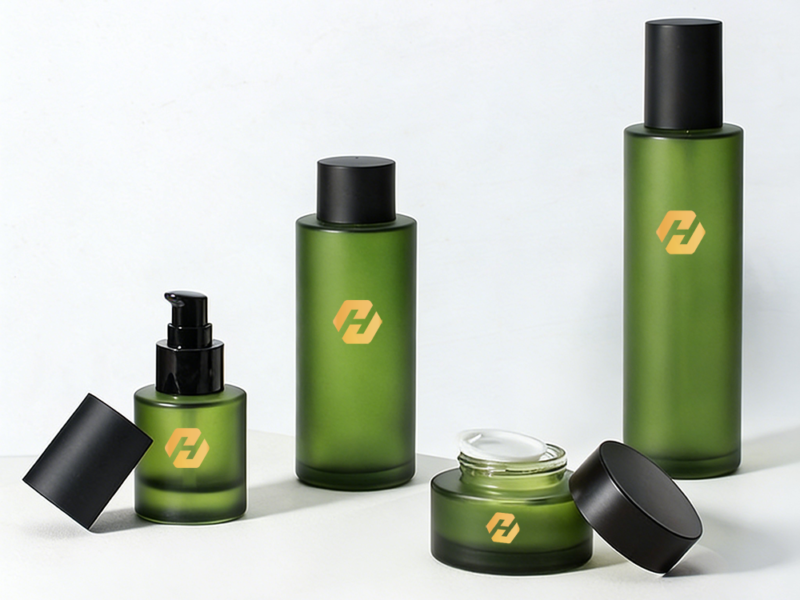
The success of a premium skincare or cosmetic line often rests on the tactile and functional integrity of its packaging. For brand owners and procurement managers, “custom cosmetic bottles” represent more than just aesthetics; they are complex engineering projects that must balance chemical compatibility, user experience, and manufacturing scalability.
Transitioning from a conceptual sketch to a shelf-ready product requires a deep understanding of polymer science, molding constraints, and decorative chemistry. This guide outlines the technical roadmap for developing bespoke cosmetic containers that meet global industry standards.
The Engineering Phase: Defining Technical Specifications
Before the first drop of resin enters a mold, technical specifications must be locked. This stage determines the long-term viability of the product.
Neck Finish and Closure Compatibility
Standardization is critical for leakage prevention. Engineers typically work with standard neck finishes like 18/410, 20/410, or 24/410. The first number represents the diameter in millimeters, while the second refers to the thread style. Custom designs may require proprietary neck finishes, which necessitate custom tooling for both the bottle and the closure (pump, sprayer, or cap).
Overflow Capacity vs. Fill Volume
A common mistake in custom design is ignoring “headspace.” If a bottle is designed for a 50ml fill, the actual overflow capacity must be roughly 55-58ml. This allows for product expansion during temperature fluctuations and ensures the pump engine has sufficient clearance.
Material Science: Selecting the Right Substrate
Material selection impacts both the perceived value and the chemical stability of the formula. In high-end manufacturing, we categorize materials based on their barrier properties and clarity.
| Material | Clarity | Chemical Resistance | Sustainability | Common Use Case |
| PET | High (Glass-like) | Moderate | High (Recyclable) | Toners, Body Oils |
| PP | Translucent/Opaque | Excellent | Moderate | Creams, Balms |
| Glass | Premium | Superior | High (Infinite) | Luxury Serums |
| Acrylic (PMMA) | High (Thick Wall) | Low (Needs Inner) | Low | High-end Jars |
| PCR (Post-Consumer Resin) | Variable | Moderate | Highest | Eco-conscious lines |
For brands utilizing active ingredients like Vitamin C or Retinol, airless bottle systems are often the preferred choice. These systems, frequently featured in the Hyrun Packaging cosmetic bottle collection, use a piston mechanism to dispense product without air exposure, significantly extending shelf life.
The Production Process: From Resin to Form
Manufacturing custom cosmetic bottles typically follows one of three primary molding paths.
1. Injection Stretch Blow Molding (ISBM)
Used primarily for PET, this two-stage process creates bottles with high clarity and strength. A “preform” is injected and then reheated and stretched into the final mold shape. This is ideal for high-volume runs where neck precision is paramount.
2. Extrusion Blow Molding (EBM)
EBM is the standard for PE and PP bottles. It allows for more complex shapes and handles (though rare in cosmetics) and is generally more cost-effective for medium-sized runs. EBM is the go-to method for squeeze bottles.
3. Custom Injection Molding
For heavy-wall jars or luxury acrylic components, injection molding provides the highest level of detail and wall thickness. This process requires significant upfront investment in “hard tooling” (steel molds), which can withstand hundreds of thousands of cycles.
Decoration and Surface Finishing Chemistry
A custom bottle is defined by its finish. Achieving a specific brand color or texture involves different chemical processes.
Silk Screen Printing: Best for bold, opaque logos. It uses UV-cured inks that provide high resistance to the oils found in cosmetic formulas.
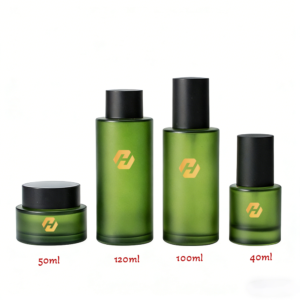
Hot Stamping: Utilizes heat and pressure to transfer a metallic foil (gold, silver, rose gold) onto the surface. This adds a “premium” metallic sheen that printing cannot replicate.
Acid Frosting & Sandblasting: These methods create a matte, translucent finish on glass, often used to hide the internal pump tubing for a cleaner look.
Electroplating/Metallization: A vacuum process that deposits a thin layer of metal onto plastic components, giving them the weight and feel of real metal.
Quality Assurance and Compatibility Testing
Manufacturing errors in the cosmetic industry lead to costly recalls. Professional OEM partners implement a multi-stage QA protocol.
Vacuum Leakage Testing
Bottles are placed in a vacuum chamber to simulate the low-pressure environment of an airplane cargo hold. This ensures the seals hold under atmospheric stress.
Formula Compatibility (Stability Testing)
The “custom” element must include testing the formula against the bottle material. Some essential oils can “craze” (crack) acrylic, while others may permeate PET. We recommend a minimum of 4 to 8 weeks of accelerated stability testing at 40°C-45°C.
Torque Testing
This measures the force required to open or close a bottle. For elderly consumers or luxury markets, the “opening experience” must be smooth yet secure.
Sourcing and Supplier Evaluation Logic
When moving into the procurement phase, commercial buyers must look beyond the unit price. A reliable partner like Hyrun Packaging offers vertical integration—managing everything from mold design to final decoration.
Key evaluation metrics should include:
Tooling Ownership: Does the brand own the custom mold after the initial fee?
Capacity Scalability: Can the supplier handle a move from 10,000 units to 250,000 units?
Compliance: Do the materials meet FDA, REACH, or EU cosmetic regulations?
For brands looking to minimize their environmental footprint, discussing PCR (Post-Consumer Recycled) percentages early in the design phase is essential, as recycled resins can slightly alter the base color of the bottle.
FAQ
Q: What is the typical lead time for custom cosmetic bottle tooling?
A: For new injection or blow molds, lead times generally range from 25 to 45 days. This includes the initial 3D design, mold fabrication, and “T1” sampling for customer approval.
Q: Can I achieve a custom color with low MOQs?
A: Most manufacturers require a Minimum Order Quantity (MOQ) of 10,000 units for custom color matching (Pantone). For quantities lower than this, brands often use “stock” colors and rely on silk screening or labeling for customization.
Q: What is the difference between airless bottles and standard dip-tube bottles?
A: Standard bottles use a dip tube and a pump that introduces air into the container as product is dispensed. Airless bottles use a vacuum piston, which protects sensitive formulas from oxidation and allows for nearly 99% product evacuation.
Q: Are sustainable materials like PCR as durable as virgin plastic?
A: High-quality PCR (especially at 30-50% blends) maintains similar structural integrity to virgin resin. However, there may be slight “black spots” or a greyish tint in the material, which many eco-conscious brands now embrace as a sign of authenticity.
Q: How do I ensure my logo doesn’t peel off the bottle?
A: Adhesion depends on the surface energy of the bottle. For materials like PP, “flame treatment” or “corona treatment” is often required before printing to ensure the ink bonds permanently to the plastic.
Reference Sources
ISO 9001:2015: Quality management systems — Requirements for manufacturing.
SGS Packaging Testing Services: Global standards for chemical compatibility and physical durability.
Sustainable Packaging Coalition (SPC): Guidance on PCR and recyclable design.