
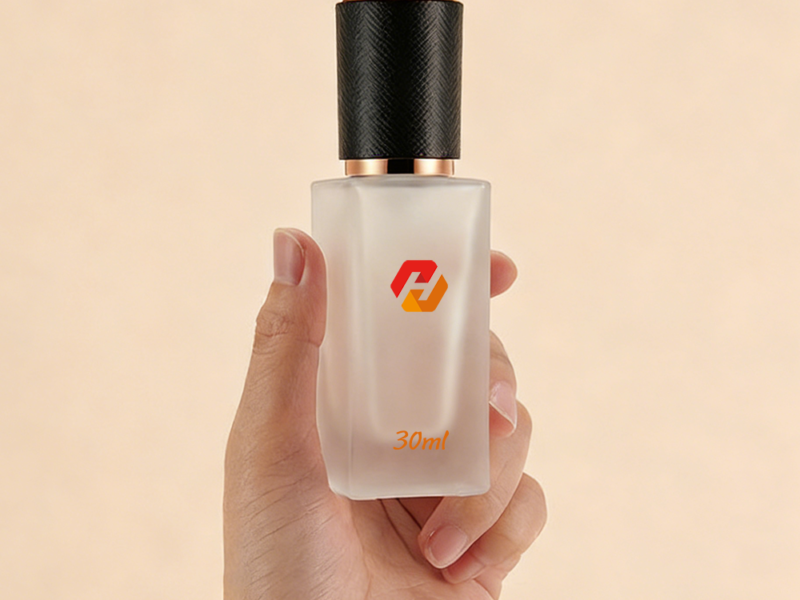
The transition from a standard container to a custom glass cosmetic bottle is a strategic pivot that balances brand identity with high-level engineering. For beauty and skincare brands, glass remains the gold standard due to its chemical inertness, premium weight, and infinite recyclability. However, the path from a CAD drawing to a shelf-ready product involves complex manufacturing variables that dictate both cost and quality.
This guide explores the technical framework of custom glass production, offering procurement managers and designers a roadmap for navigating the complexities of the packaging industry.
Engineering the Aesthetic: Material Properties of Cosmetic Glass
In the manufacturing of custom glass cosmetic bottles, the formulation of the glass itself is the first point of differentiation. Most premium cosmetic containers utilize “Super Flint” glass, known for its high transparency and refractive index, which mimics the clarity of crystal.
Unlike standard beverage glass, cosmetic-grade glass requires higher purity in raw materials—specifically lower iron content—to prevent the green or yellow tints often seen in lower-grade containers.
Key Technical Specifications:
-
Chemical Stability: Essential for high-pH skincare formulas or alcohol-based fragrances.
-
Thermal Shock Resistance: Crucial for products involving hot-fill processes.
-
Hydrolytic Resistance: Measured via ISO 719 standards to ensure the glass surface does not react with aqueous solutions over time.
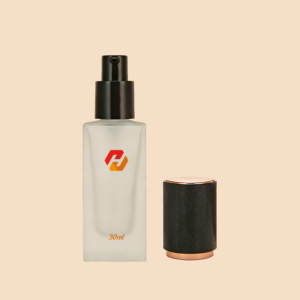
The Manufacturing Workflow: From Parison to Polish
Customization in glass manufacturing occurs primarily during the molding stage. Depending on the bottle’s geometry and wall thickness, manufacturers like those found at Hyrun Packaging typically utilize one of two primary processes:
-
Blow-and-Blow Process: Best suited for narrow-neck bottles (perfumes and oils). Compressed air is used to form the parison (the initial glass shape) and then blow it into the final mold.
-
Press-and-Blow Process: Ideal for wide-mouth jars and thick-walled bottles. A plunger creates the initial cavity, offering superior control over glass distribution and wall thickness.
The Role of Custom Molds
A custom project requires a dedicated mold set. This usually involves a two-stage investment: a sampling mold (single cavity) for initial prototyping and a production mold (multi-cavity) for mass manufacturing. Engineering tolerances for these molds are typically held within ±0.5mm to ensure compatibility with automated filling lines and closure systems.
Comparison of Surface Decoration Techniques
Customization isn’t limited to the shape of the bottle. The “feel” of a cosmetic product is often defined by its secondary processing.
| Technique | Durability | Complexity | Best For |
| Acid Frosting | Permanent | Moderate | Luxury serum bottles, high-end skincare. |
| Silk Screen Printing | High | High | Precise logos, multi-color branding. |
| Hot Stamping | Moderate | Low | Metallic gold/silver accents. |
| Internal Lacquering | Medium | High | Creating “depth” and 3D color effects. |
| Color Spraying | High | Low | Gradient colors, opaque matte finishes. |
Designing for Compatibility: The Closure System
A custom glass cosmetic bottle is only as functional as its closure. In the B2B procurement cycle, failure to account for thread specifications (GPI/GCMI standards) is a frequent cause of production delays.
When sourcing custom cosmetic bottles, engineering teams must verify the neck finish matches the dispensing mechanism—whether it be a lotion pump, a fine-mist sprayer, or a glass dropper. For instance, high-viscosity creams require jars with wide-diameter threads, while volatile essential oils require tight-sealing phenolic caps or specialized droppers to prevent oxidation.
Quality Control and Compliance Standards
For brands operating in the EU or North America, compliance with safety standards is non-negotiable. Manufacturing facilities must adhere to rigorous quality management systems (ISO 9001:2015) and environmental standards.
Critical Quality Inspections include:
-
Annealing Quality: Using polariscopes to check for internal stress that could lead to spontaneous breakage.
-
Dimensional Accuracy: Verifying neck bore diameter and thread consistency using “Go/No-Go” gauges.
-
Vacuum Testing: Essential for ensuring the airtight integrity of pumps and droppers.
-
Heavy Metal Testing: Ensuring lead and cadmium levels are well below FDA and REACH limits.
Sourcing Strategy: Navigating the B2B Landscape
Moving into the production phase requires a clear understanding of the commercial logistics involved in custom manufacturing.
MOQ (Minimum Order Quantity)
Custom glass production is energy-intensive. Traditional furnace runs for custom shapes typically require MOQs ranging from 10,000 to 30,000 units. For smaller brands, “semi-customization”—using stock bottles with custom colors or printing—is often the most viable entry point.
Lead Times
A typical timeline for a fully custom glass project includes:
-
Design & CAD: 1–2 weeks.
-
Sampling Mold & Prototypes: 3–4 weeks.
-
Mass Production Mold & Run: 5–7 weeks.
-
Shipping: 3–5 weeks (ocean freight).
By partnering with an integrated supplier like Hyrun, brands can often streamline these phases by utilizing pre-vetted mold libraries and in-house decoration facilities.
FAQ
Q: What is the average cost for a custom glass bottle mold?
A: For a standard cosmetic bottle, a sampling mold typically costs between $800 and $1,500, while a full set of production molds can range from $3,500 to $6,000 depending on the complexity and number of cavities.
Q: Can glass bottles be made with recycled content (PCR)?
A: Yes. Post-Consumer Recycled (PCR) glass can be integrated into new production. However, higher percentages of PCR glass may slightly affect the color consistency of “Super Flint” glass, often introducing a subtle blue or green tint.
Q: How do I ensure my custom bottle won’t leak during shipping?
A: This is managed through “Closure Compatibility Testing.” We recommend testing the bottle and closure under a vacuum chamber at -0.5 bar for 10 minutes to ensure no leakage occurs under pressure changes typical of air freight.
Q: Is frosted glass more expensive than clear glass?
A: Yes, frosting is a secondary process usually involving an acid bath or sandblasting. It adds to the per-unit cost and requires additional handling time.
Q: What are the standard neck finishes for cosmetic droppers?
A: The most common neck finishes for serum and oil bottles are 18/400, 18/410, and 20/400. These standards ensure that any industry-standard dropper will fit the bottle securely.
Reference Sources
-
Glass Packaging Institute (GPI): Standard Finish Drawings and Specifications
-
International Organization for Standardization (ISO): ISO 719:1985 – Glass Hydrolytic Resistance
-
ASTM International: Standard Test Methods for Thermal Shock Resistance of Glass Containers
-
SGS Technical Library: Guidelines for Cosmetic Packaging Safety and Compliance