
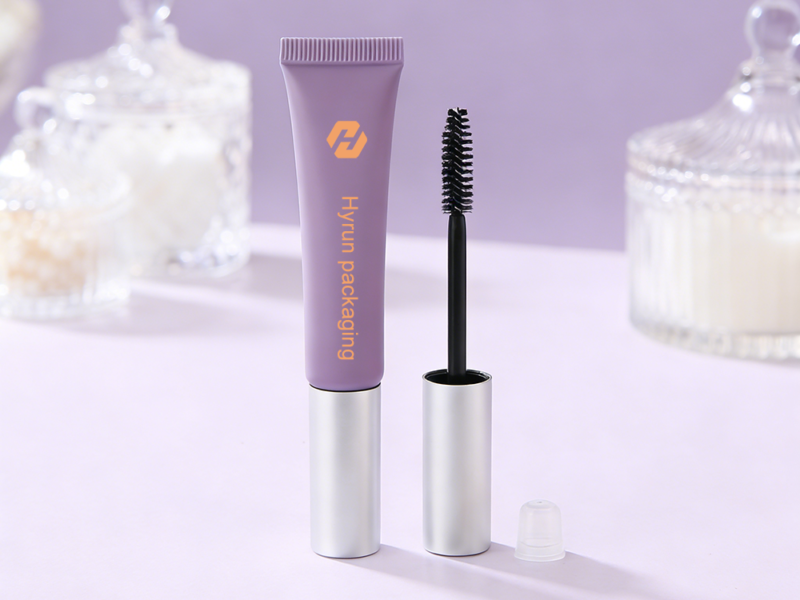
The success of a mascara product is rarely determined by the formula alone. In the cosmetics industry, performance is a synergistic result of the formula’s viscosity and the mechanical engineering of the delivery system. For procurement managers and brand owners, sourcing empty mascara tubes requires a deep understanding of material compatibility, applicator geometry, and airtight sealing mechanisms.
Selecting the right packaging is not merely an aesthetic choice; it is a technical decision that impacts shelf life, application precision, and user experience. Whether you are launching a boutique line or scaling global production, the following guide outlines the critical manufacturing and sourcing parameters for professional-grade mascara packaging.
Technical Material Selection: AS, ABS, and PETG
In mascara tube manufacturing, the choice of thermoplastic resin dictates the tube’s chemical resistance, clarity, and durability. While most tubes appear similar, their performance under stress varies significantly.
-
AS (Acrylonitrile Styrene): Known for its high transparency and rigidity. It offers excellent chemical resistance against the oils and waxes found in waterproof formulas. However, AS can be brittle if dropped.
-
ABS (Acrylonitrile Butadiene Styrene): A staple in the industry due to its high impact resistance and superior surface finish. ABS is the preferred choice for tubes requiring secondary processes like UV metallization or complex spray coating.
-
PETG (Polyethylene Terephthalate Glycol): Increasingly popular for its glass-like clarity and “heavy-wall” feel. PETG is exceptionally robust and has high compatibility with a wide range of volatile cosmetic ingredients.
-
PCR (Post-Consumer Recycled) Plastics: For brands prioritizing sustainability, PCR-PP or PCR-PETG options are now standard in high-quality OEM catalogs, allowing for eco-friendly claims without sacrificing structural integrity.
| Material | Transparency | Chemical Resistance | Impact Strength | Best For |
| AS | Excellent | High | Moderate | Clear tubes, waterproof formulas |
| ABS | Opaque | Moderate | High | Luxury metallized finishes |
| PETG | Excellent | High | High | Premium brands, volatile formulas |
| PP | Translucent | High | High | Mass market, squeezable tubes |
The Engineering of the Applicator: Fiber vs. Silicone
The “mascara wand” is the most critical functional component of the package. When sourcing empty mascara tubes, the applicator must be matched to the intended effect of the formula (volumizing, lengthening, or defining).
1. Nylon/Fiber Brushes
These are the traditional choice, constructed by twisting synthetic fibers between two wire strands. By adjusting the density and “cut” of the fibers, manufacturers can create brushes that hold more formula for dramatic volumizing effects.
2. Molded Silicone (TPE) Brushes
Engineered through precision injection molding, silicone brushes offer unparalleled definition and separation. Because the bristles are integrated into the core, they are stiffer, allowing for a “combing” action that is ideal for lengthening formulas.
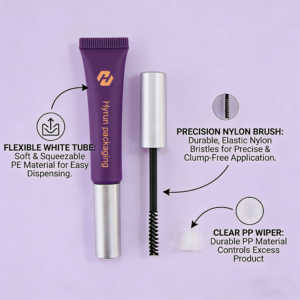
3. The Wiper-to-Brush Ratio
A common point of failure in low-quality sourcing is a mismatch between the wiper (the insert at the tube’s neck) and the brush. The wiper’s internal diameter must be calibrated to the brush’s outer diameter to ensure the correct “load” of product. An improperly sized wiper leads to “clumping” (if too loose) or “starving” the brush (if too tight).
Customization and Surface Treatment Capabilities
For a brand to stand out on the shelf, the empty mascara tube serves as a canvas. Technical decorative processes at the factory level include:
-
Silk Screening: Ideal for high-contrast logos with a tactile feel.
-
Hot Stamping: Utilizes heat and foil to create metallic gold, silver, or rose gold branding.
-
UV Metallization: A vacuum plating process that gives plastic tubes a premium metallic look.
-
Soft-Touch Coating: A secondary spray that provides a matte, rubberized texture, enhancing the “hand-feel” and grip.
Quality Assurance in Mass Production
When evaluating a supplier like Hyrun Packaging, it is essential to look beyond the unit price and focus on manufacturing tolerances. In cosmetic packaging, a variance of even 0.1mm can result in “leaking” or “drying out” (loss of airtight seal).
Key Inspection Protocols Include:
-
Vacuum Leakage Testing: Tubes are placed in a vacuum chamber to ensure the seal holds under pressure changes (critical for air travel).
-
Torque Testing: Measuring the force required to open and close the cap to ensure consistency for the end-user.
-
Compatibility Testing: Assessing how the formula reacts with the tube material over 4–8 weeks at elevated temperatures to check for deformation or chemical leaching.
Strategic Sourcing: MOQs and Lead Times
In the B2B landscape, the procurement workflow for custom mascara tubes typically follows a structured timeline.
-
Sampling Phase: Most reputable manufacturers provide “stock samples” for initial compatibility testing within 7–10 days. Custom color-matched (PMS) samples usually require 14–21 days.
-
Minimum Order Quantity (MOQ): Standard MOQs for custom-colored or printed tubes generally range from 10,000 to 12,000 units. For stock components in standard black or white, some suppliers may offer lower thresholds for startup brands.
-
Lead Times: Mass production typically spans 30 to 45 days post-sample approval. This accounts for injection molding, surface treatment, assembly, and QC.
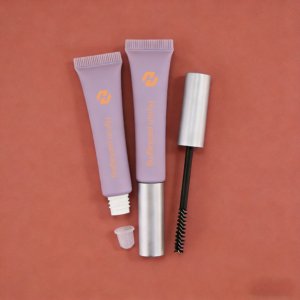
Evaluating Your Packaging Partner
When sourcing from the Hyrun Mascara Tube Collection, consider the synergy between their various shapes—from slim 3ml “sample size” tubes to 12ml “jumbo” tubes. A versatile supplier should offer a range of neck sizes (e.g., 13/410 or 15/415) to accommodate different applicator styles.
For OEM projects, ensure the supplier provides technical drawings (PDF/CAD) early in the process. This allows your design team to accurately map the “print area” and avoid distortion on curved or tapered surfaces.
FAQ: Professional Sourcing for Mascara Tubes
Q: Can I use the same tube for a lash growth serum and a mascara?
A: While the tube body can be the same, the applicator must change. Lash serums typically require a fine-tip liner brush or a flocked “doe-foot” applicator, whereas mascara requires a bristled brush. Ensure your supplier can swap the internal stem/applicator while keeping the outer packaging consistent.
Q: How do I prevent the mascara formula from drying out prematurely?
A: This is controlled by the “neck finish” and the “inner plug” (wiper) design. Look for tubes with a “click-lock” or high-thread precision to ensure an airtight seal. PETG and thick-walled ABS are also better barriers against moisture loss than thin-walled PP.
Q: What is the benefit of PCR materials in mascara packaging?
A: PCR (Post-Consumer Recycled) plastic reduces the carbon footprint of your packaging. Most manufacturers can offer 30% to 100% PCR blends. However, be aware that high PCR content may slightly affect the “clarity” of transparent tubes.
Q: What are the standard shipping terms for bulk packaging orders?
A: Most international orders are handled via FOB (Free On Board) or CIF (Cost, Insurance, and Freight). For high-volume projects, sea freight is the standard to minimize unit costs, though air freight is used for urgent “market launch” quantities.
Q: Are these tubes compliant with FDA/EU regulations?
A: The packaging material itself must be “food grade” or “cosmetic grade” and free from heavy metals and BPA. Always request SGS or Intertek certification reports from your supplier to ensure compliance with Global Cosmetic Regulations (EC No 1223/2009).
Reference Sources:
-
Sustainable Packaging Coalition: Advancing Sustainable Packaging