
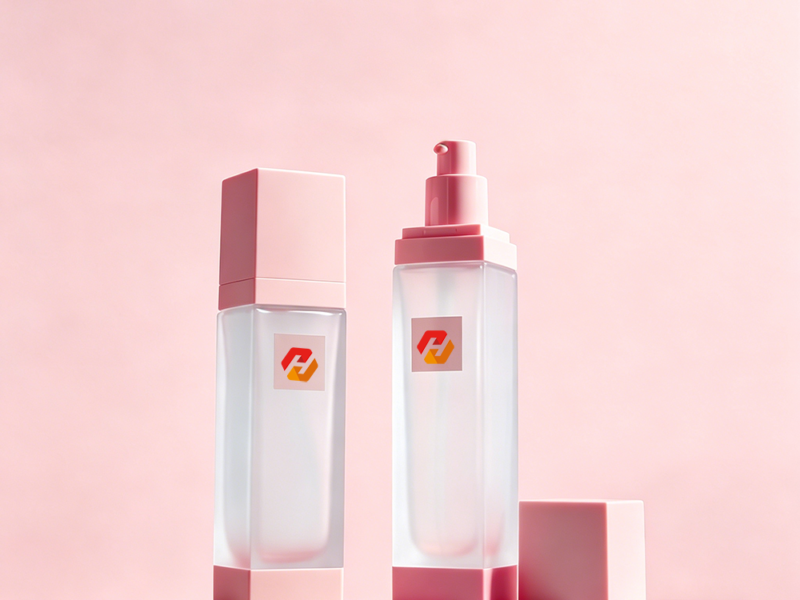
Determining the true cosmetic packaging cost is one of the most complex stages of product development. For most beauty brands, packaging represents 20% to 40% of the total Cost of Goods Sold (COGS). It is not merely a container; it is a precision-engineered delivery system that must balance aesthetics, compatibility, and manufacturing feasibility.
A common mistake is focusing solely on the unit price. In reality, the total expenditure is a composite of material resins, mechanical complexity, decoration labor, and logistical variables. Understanding these layers allows brand managers to optimize their budgets without compromising the integrity of the formulation.
1. Material Selection: The Foundation of Unit Pricing
The primary driver of the cosmetic packaging cost is the raw material. Each material offers a different balance of chemical resistance, clarity, and weight, which directly impacts the per-unit price.
-
PET (Polyethylene Terephthalate): Often the most cost-effective option for bottles. It offers high clarity and is 100% recyclable.
-
PP (Polypropylene): Frequently used for caps and jars due to its excellent chemical resistance and “living hinge” capability.
-
Glass: Typically carries a higher unit cost and higher shipping fees due to weight. However, it is perceived as premium and is highly inert.
-
Acrylic (PMMA): Used for “double-wall” luxury jars. It mimics the look of glass but is shatterproof. This is generally a high-cost plastic due to the manufacturing time required for thick-walled parts.
-
PCR (Post-Consumer Recycled) Resins: Currently, PCR materials often carry a 10%–15% price premium over virgin plastics due to the complexity of the recycling supply chain.
2. Tooling and Mold Investment Logic
In cosmetic manufacturing, brands must choose between “Public Molds” and “Private Molds.” This decision creates a massive fork in the initial cosmetic packaging cost.
Public Molds:
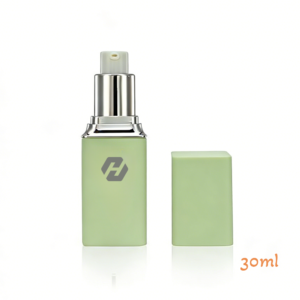
These are existing designs owned by the manufacturer. By using a public mold—such as those found in standard cosmetic bottle collections—brands can bypass the thousands of dollars required for tooling. The trade-off is a less unique silhouette.
Private Molds (Custom Tooling):
If a brand requires a unique shape, they must invest in custom steel or aluminum molds. A multi-cavity injection mold for a custom bottle can range from $5,000 to over $30,000 depending on the complexity and the number of “cavities” (the number of parts produced per cycle). While the upfront cost is high, the per-unit cost may decrease over very high volumes (100k+ units).
3. Functional Components and Mechanical Complexity
The more moving parts a package has, the higher the cost. A simple screw cap is significantly cheaper than a high-performance dispensing system.
| Component Type | Cost Impact | Technical Consideration |
| Standard Screw Cap | Low | Requires basic liner for seal. |
| Lotion Pump | Medium-High | Internal springs, ball valves, and dip tubes increase assembly labor. |
| Fine Mist Sprayer | Medium | Precise orifice size is required for consistent droplet distribution. |
| Airless Pump System | High | Uses a piston mechanism to eliminate air contact; ideal for preservative-free formulas. |
Airless systems are increasingly popular for high-end skincare. While they increase the cosmetic packaging cost, they extend shelf life and provide a 99% evacuation rate, which adds significant value to the end consumer.
4. The Impact of Surface Finishing and Decoration
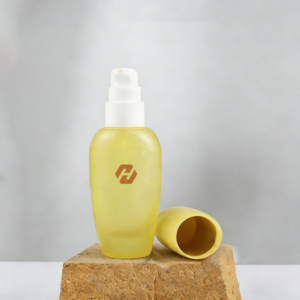
A “naked” bottle is rarely the final product. Surface treatments transform a commodity container into a brand asset, but each “pass” through a machine adds to the cost.
-
Color Matching (Masterbatch): Adding a custom pigment to the plastic resin during injection. This is usually the most affordable way to customize color.
-
Silk Screen Printing: Best for bold, solid colors. Each color requires a separate screen and pass, increasing labor costs.
-
Hot Stamping: Uses heat and foil to create metallic effects (gold/silver). It is priced per square inch of foil used.
-
UV Coating & Metallization: This involves a vacuum plating process to give plastic a metallic chrome finish. It is a premium process that increases the rejection rate during quality control (QC), thus raising the price.
-
Frosted Finish: Can be achieved through “acid etching” (for glass) or “spray frosting” (for plastic).
5. Production Volume and Economies of Scale
The Minimum Order Quantity (MOQ) is the most powerful lever in the cosmetic packaging cost equation. In manufacturing, “set-up time” is a fixed cost. Whether a factory produces 1,000 units or 100,000 units, the time required to calibrate the machines and stabilize the color is the same.
In a typical production run:
-
Low Volume (Under 5,000 units): High unit price due to the disproportionate impact of setup labor and material waste during calibration.
-
High Volume (50,000+ units): The setup costs are “amortized” over a large number of units, leading to a much lower price point.
6. Logistics and Quality Assurance (QA) Factors
Transportation and protection are often overlooked in the initial budget.
-
Shipping “Air”: Large jars and bottles take up significant volume. If shipping internationally, the “dimensional weight” can sometimes exceed the actual weight of the product, doubling the freight cost.
-
Protective Packaging: Premium finished bottles (like UV coated or silk-screened) require individual polybags or egg-crate dividers to prevent scratching during transit. This adds roughly
0.02-0.02-0.05 per unit but is necessary to prevent high defect rates.
-
Compatibility Testing: Before mass production, brands must conduct “leak tests” and “compatibility tests” (checking if the formula reacts with the plastic). Failure to do this can lead to catastrophic product recalls.
Strategic Selection for Brand Owners
When evaluating the technical specifications of cosmetic bottles, brands should prioritize functional reliability first. A beautiful bottle that leaks or a pump that clogs will destroy brand equity far faster than a simple design will.
To optimize costs, consider using a standard “public” bottle shape but investing the budget into a custom-colored pump or high-quality silk-screen printing. This creates a “custom” look without the $20,000 investment in a private mold.
FAQ
What is the average MOQ for custom cosmetic packaging?
For standard plastic bottles, MOQs typically start at 5,000 to 10,000 units. For custom-colored components or specific airless systems, the MOQ may rise to 10,000 or 20,000 units to justify the machine calibration time.
Why is glass more expensive than plastic?
Glass requires significantly more energy to manufacture (furnace temperatures) and is much heavier, which increases carbon surcharges and freight costs. Additionally, breakage rates during transit are higher, requiring more robust outer packaging.
How much does a custom mold cost?
A simple injection mold for a cap might cost 3,000-3,000-5,000. A complex, multi-cavity blow mold for a custom-shaped bottle generally ranges from $8,000 to $15,000, while high-precision airless system molds can exceed $30,000.
Does sustainable packaging always cost more?
Generally, yes. PCR (Post-Consumer Recycled) plastic and bio-based plastics currently command a 10%–20% premium over virgin materials. However, as global supply chains shift toward circularity, this gap is slowly narrowing.
How can I reduce my shipping costs?
Consider “nested” packaging or sourcing bottles and pumps from the same supplier to ensure the components are shipped as a single, assembled unit where possible, reducing the overall volume of the shipment.
Reference Sources
-
ISO 22716: Good Manufacturing Practices (GMP) for Cosmetics – Understanding quality standards in packaging production.
-
ASTM D3475: Standard Classification of Child-Resistant Packages – Critical for specific cosmetic categories.
-
Sustainable Packaging Coalition (SPC): Reports on the cost-benefit analysis of PCR vs. Virgin plastics.
-
British Glass & Glass Packaging Institute (GPI): Technical whitepapers on the environmental and economic impact of glass packaging.