
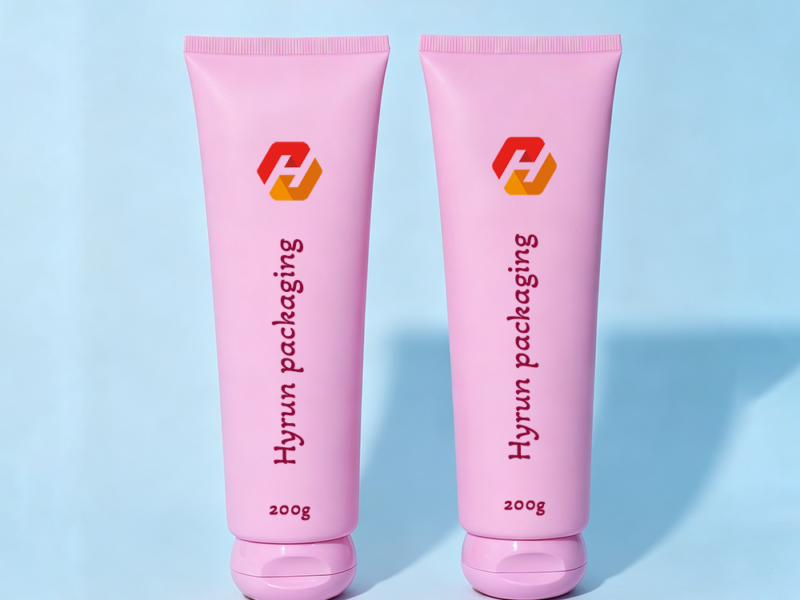
The global beauty industry is defined by two relentless pressures: the aesthetic demand for “shelf-presence” and the economic necessity of high-margin scalability. Whether you are a boutique startup launching a niche serum or a multinational corporation managing a diverse SKU portfolio, the procurement of primary packaging—specifically through wholesale channels—is a strategic pivot point that dictates long-term profitability.
Selecting the right wholesale partner is not merely a transaction of volume for price. It is a technical integration of manufacturing capability, material science, and logistics. For brands focusing on specialized delivery systems like cosmetic tubes, understanding the intersection of wholesale economics and engineering is essential.
Why Wholesale Cosmetic Packaging is a Strategic Necessity
At its core, wholesale cosmetic packaging is the practice of procuring primary containers in bulk to leverage economies of scale. However, from a manufacturing perspective, the value lies in “amortization.”
When a factory sets up a production line for extruded PE tubes or Aluminum Barrier Laminate (ABL) structures, the initial “make-ready” costs—tooling, ink calibration, and machine calibration—are high. Wholesale orders allow these fixed costs to be spread across tens of thousands of units, drastically reducing the price per piece.
For brands, this translates into:
-
Price Stability: Locking in material costs (such as resin or aluminum) against market fluctuations.
-
Design Consistency: Ensuring that the “Brand Blue” on the first 1,000 units matches the 100,000th unit through continuous production runs.
-
Supply Chain Resilience: Reducing the frequency of re-orders and the risk of “out-of-stock” scenarios during peak seasonal demand.
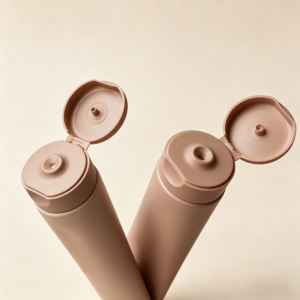
Strategic Advantages for Small Brands: Beyond the MOQ
Small brands often view “wholesale” as a barrier due to Minimum Order Quantities (MOQs). However, modern manufacturing—specifically in the cosmetic tube sector—has evolved to offer “Flexible Wholesale” models.
1. Professionalism and Perceived Value
A small brand using generic, off-the-shelf bottles often struggles to justify a premium price point. Transitioning to wholesale custom-decorated tubes allows for high-end finishes like matte coatings, hot stamping, and offset printing. This technical upgrade moves the product from “homemade” to “professional grade” in the consumer’s eyes.
2. Cost-Effective Barrier Protection
Small-batch packaging often relies on simple plastics. By moving to wholesale procurement, small brands can access advanced materials like ABL (Aluminum Barrier Laminate) or PBL (Plastic Barrier Laminate). These materials provide superior oxygen and light barriers, which are critical for “clean beauty” formulas that use fewer synthetic preservatives.
3. Strategic Stockpile
For a growing brand, the greatest cost is often the shipping of small, frequent orders. Wholesale allows a brand to store six months of inventory, reducing the “per-unit shipping cost” and freeing up capital to focus on marketing rather than constant logistics management.
Operational Excellence for Large Enterprises: Scaling with Precision
For large-scale brands, wholesale is less about “starting out” and more about “optimizing the machine.” At this level, the focus shifts toward manufacturing tolerances and sustainability compliance.
1. High-Speed Line Compatibility
Large brands utilize automated filling and sealing lines. Wholesale packaging must meet strict physical tolerances. For instance, the diameter and wall thickness of a PE cosmetic tube must be consistent to within microns to ensure the induction sealing or ultrasonic tail sealing equipment operates without downtime.
2. Sustainability at Scale (PCR Integration)
Large enterprises are under regulatory pressure to reduce virgin plastic use. Wholesale partners now offer Post-Consumer Recycled (PCR) resins. When purchasing in bulk, large brands can facilitate a “closed-loop” supply chain, ensuring that 30% to 100% of their packaging volume meets ESG (Environmental, Social, and Governance) targets without compromising the structural integrity of the tube.
3. Color Management and Delta E Standards
In mass retail, a slight color shift between two tubes on a shelf can lead to “perceived spoilage” by consumers. Large-scale wholesale production utilizes spectrophotometers to maintain a Delta E (color difference) of less than 2.0. This level of precision is only achievable in dedicated wholesale manufacturing runs, not through piecemeal sourcing.
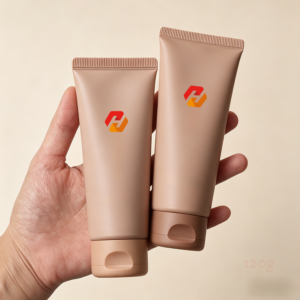
Technical Comparison: Stock Wholesale vs. Custom Wholesale
| Feature | Stock Wholesale | Custom Wholesale (OEM/ODM) |
| Lead Time | 3–7 Days | 25–45 Days |
| MOQ | Low (e.g., 500 – 1,000 pcs) | Higher (e.g., 5,000 – 10,000 pcs) |
| Branding | Limited (Labels/Silk-screen) | Unlimited (Offset, Hot Stamping, Tail Sealing) |
| Material Choice | Standard PE / PP | ABL, PBL, PCR, Sugarcane PE |
| Ideal For | Market Testing / Quick Launches | Established SKU Scaling / Premium Re-brands |
Navigating the Procurement Workflow: A Technical Checklist
When transitioning to a wholesale model, the procurement manager must evaluate a supplier based on more than just a quote. Use the following manufacturing-centric criteria:
-
Material Compatibility Testing: Ensure the tube material (e.g., LDPE vs. HDPE) does not react with your formula’s essential oils or active ingredients. Wholesale suppliers should provide samples for 4-week accelerated stability testing.
-
Closure Engineering: Does the wholesale package include the orifice size required for your product’s viscosity? A high-viscosity clay mask requires a larger orifice than a low-viscosity eye cream.
-
Decoration Capabilities: For high-volume runs, offset printing is the most cost-effective. Ensure the supplier can handle up to 6 or 8 colors in a single pass to maintain efficiency.
-
Compliance and Certification: Verify that the factory holds ISO 9001:2015 certifications and that the raw materials are FDA or REACH compliant.
The Role of Hyrun Packaging in Your Supply Chain
For brands specializing in topical applications, Hyrun Packaging provides a sophisticated bridge between manufacturing expertise and wholesale accessibility. Their focus on cosmetic tubes covers the full spectrum of modern needs:
-
Diverse Material Science: From standard PE tubes for mass-market lotions to sophisticated ABL structures for pharmaceutical-grade cosmetics.
-
Customization Depth: Offering various head designs (flip-top, screw cap, needle nose) and advanced decoration techniques that allow wholesale orders to maintain a “boutique” aesthetic.
-
Scalable MOQs: Supporting small brands as they transition from stock containers to custom-manufactured wholesale lots.
In the B2B landscape, your packaging supplier is an extension of your production line. Choosing a wholesale partner who understands the engineering behind the aesthetics is the most effective way to ensure brand longevity.
FAQ: Professional Wholesale Procurement
Q1: What is the typical MOQ for custom wholesale cosmetic tubes?
Generally, custom production runs (where the tube is extruded and printed from scratch) start at 5,000 to 10,000 units. For “stock wholesale” (pre-made tubes that are later silk-screened), MOQs can be as low as 1,000 units.
Q2: How does PCR (Post-Consumer Recycled) plastic affect wholesale pricing?
PCR material currently carries a slight premium (roughly 10-20% higher than virgin resin) due to the intensive sorting and cleaning processes required. However, in large wholesale volumes, this cost is often offset by the marketing value and tax incentives in certain regions (like the UK Plastic Packaging Tax).
Q3: Can wholesale suppliers handle the assembly of caps and pump heads?
Yes. Most professional wholesale manufacturers offer “turnkey” solutions where the tube and closure (flip-top, pump, or rollerball) are assembled or shipped together as a validated set to ensure thread compatibility and leak prevention.
Q4: What is the difference between ABL and PBL tubes in wholesale orders?
ABL (Aluminum Barrier Laminate) contains a thin layer of aluminum, providing the best barrier against light and oxygen, but it retains “kinks” when squeezed. PBL (Plastic Barrier Laminate) is all-plastic and “springs back” to its original shape, making it better for maintaining aesthetic appearance throughout the product’s life.
Reference Sources
-
ISO 9001:2015: Quality Management Systems for Manufacturing.
-
Association of Plastic Recyclers (APR): Guidelines for PCR content in packaging.
-
FDA Packaging & Food Contact Substances (FCS): Regulations on materials used in cosmetic containers.
-
ASTM D3475: Standard Classification of Child-Resistant Packages.