
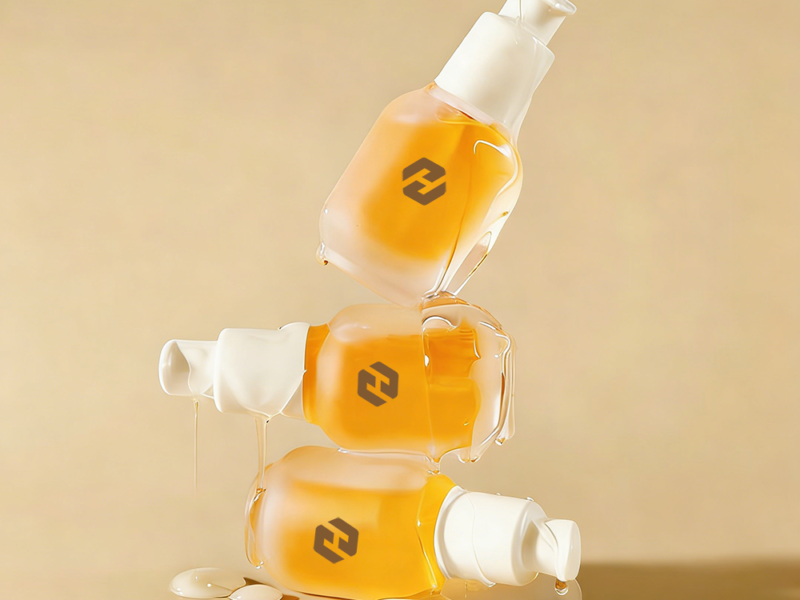
Packaging is the first physical touchpoint between a beauty brand and its consumer. In a saturated market, a “standard” bottle rarely captures the premium shelf presence required to drive conversions. Customizing cosmetic bottles is not merely an aesthetic choice; it is a complex engineering and branding strategy that involves material science, precise decoration techniques, and supply chain management.
For brand owners and procurement managers, understanding the nuances of customization—from mold design to surface finishes—is critical to ensuring product compatibility and cost-efficiency. This guide examines the technical roadmap for developing high-performance, custom-branded cosmetic packaging.
Material Selection: The Foundation of Customization
Before choosing a color or logo placement, you must select a substrate that aligns with both your brand identity and the chemical requirements of your formula. Different materials offer varying degrees of transparency, weight, and barrier properties.
| Material | Best For | Technical Advantage | Customization Potential |
| PET (Polyethylene Terephthalate) | Cleansers, Toners | High clarity, lightweight, shatterproof | Easily colored, high-gloss finish |
| PP (Polypropylene) | Creams, Balms | Excellent chemical resistance, BPA-free | Matte finishes, durable hinges |
| Glass | Luxury Serums, Oils | Inert, premium weight, 100% recyclable | Frosting, internal lacquering |
| Acrylic (PMMA) | High-end Skincare | Double-wall “glass-like” appearance | Complex molding, luxury aesthetics |
| PCR (Post-Consumer Recycled) | Eco-conscious Brands | Reduced carbon footprint | Variable opacity, sustainable messaging |
When customizing for a brand, consider the “neck finish” (e.g., 18/410, 24/410). A custom bottle shape is useless if it does not maintain a hermetic seal with standard or custom dispensing pumps. At Hyrun Packaging, we emphasize matching the viscosity of the formulation with the specific bottle material to prevent leaching or “panelling” (where the bottle collapses inward).
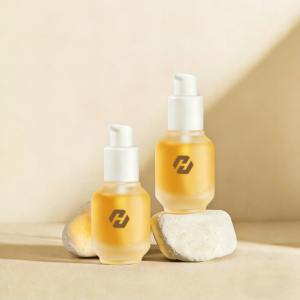
Advanced Decoration Techniques for Brand Identity
Customization is where engineering meets art. To achieve a signature look, several industrial processes are utilized, each with its own set of tolerances and costs.
1. Silk Screen Printing
This is the most common method for high-volume orders. It involves pushing ink through a mesh screen onto the bottle surface. It is ideal for bold, solid colors.
-
Pro Tip: For multi-color designs, each color requires a separate pass and drying cycle, which can impact the lead time and cost.
2. Hot Stamping (Foil Stamping)
To convey luxury, hot stamping uses heat and pressure to apply a metallic foil (usually gold, silver, or rose gold) to the bottle. This technique is perfect for high-contrast logos but requires precise temperature control to ensure the foil adheres without distorting the plastic substrate.
3. UV Coating and Electroplating
If your brand requires a metallic, mirror-like finish, electroplating is the solution. For plastic bottles, a UV coating is applied first to create a smooth base, followed by a vacuum metallization process. This is frequently used for high-end sprayers and caps to give them a weighted, metallic feel.
4. Frosting and Spray Painting
Frosting gives glass or plastic a translucent, matte texture that hides “fill lines” and provides a premium tactile experience. Custom spray painting allows for gradient effects (Ombré), which are currently trending in luxury skincare lines.
Functional Customization: Airless Systems vs. Dip Tubes
Aesthetics should never compromise functionality. Customizing the mechanism of the bottle is as important as the exterior.
-
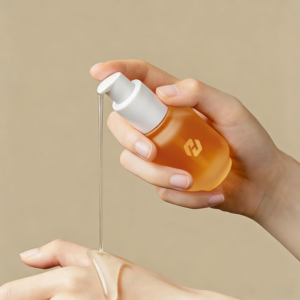
Airless Bottle Technology: Ideal for preservative-free or high-potency Vitamin C serums. These bottles use a vacuum piston to dispense the product, preventing oxidation. Customizing airless bottles requires strict adherence to internal diameter tolerances to ensure the piston moves smoothly.
-
Dip Tube Systems: For lower-viscosity liquids like perfumes or toners, custom-length dip tubes ensure the consumer can use every last drop. Invisible dip tubes are a popular “luxury” customization that enhances the clarity of glass packaging.
The Customization Workflow: From Concept to Mass Production
Moving from a 2D logo to a 3D physical product requires a structured OEM/ODM workflow.
-
Technical Briefing: Define the capacity (e.g., 30ml, 50ml, 100ml), material, and dispensing method.
-
Prototyping & 3D Modeling: Before cutting steel for a custom mold, 3D printing is used to verify the ergonomics and “hand feel” of the bottle.
-
Compatibility Testing: Crucial for industrial EEAT. The bulk formula must be stored in the custom bottle for 4–8 weeks at elevated temperatures to check for discoloration, scent changes, or material degradation.
-
Sampling (Pre-production): A small batch is decorated using the final chosen methods (e.g., silk screening on a frosted surface) to verify color accuracy (Pantone matching).
-
Mass Production & Quality Control: This involves automated inspection for “pinholes” in the printing and vacuum leak testing for the closures.
Balancing Sustainability and Customization
Modern branding often requires “Green Packaging.” Customizing with sustainability in mind involves:
-
Monomaterial Design: Using the same material (e.g., all PP) for the bottle, pump, and cap to make the entire unit recyclable.
-
Refillable Systems: Customizing an outer “shell” (often glass or acrylic) with a replaceable inner pod. This creates a high-value brand asset that encourages repeat purchases.
Procurement Considerations: MOQ and Lead Times
In the B2B landscape, customization level directly correlates with Minimum Order Quantities (MOQ).
-
Standard Bottles with Custom Printing: MOQs typically range from 3,000 to 5,000 units.
-
Custom Molded Shapes: These require significant upfront investment in tooling and often have MOQs starting at 10,000+ units.
-
Lead Times: Expect 30–45 days for standard customization and 60–90 days if custom molds are required.
FAQ
Q: Can I use any color for my custom cosmetic bottles?
A: Yes, we use Pantone matching systems (PMS) to ensure color consistency across plastic, glass, and metal components. However, keep in mind that the base material color (e.g., the yellowish tint of some recycled plastics) can slightly affect the final hue.
Q: What is the difference between silk screen and labeling for custom bottles?
A: Silk screen printing is permanent and integrated into the bottle surface, offering a premium feel. Labels are more cost-effective for smaller runs or complex, photographic designs but can sometimes peel at the edges if exposed to oils.
Q: How do I ensure my formula won’t react with a custom plastic bottle?
A: We recommend a 90-day stability test. Certain essential oils or high-alcohol content formulas can “craze” or crack certain plastics like PMMA or PC. PET or Glass are generally the safest options for reactive formulas.
Q: Are custom airless bottles more expensive than regular pump bottles?
A: Generally, yes. The internal piston mechanism and the precision required for the vacuum seal increase the per-unit cost. However, they add significant value by extending the shelf life of natural products.
Q: Does Hyrun Packaging provide design services for custom bottles?
A: We offer technical design support to ensure your artwork is optimized for the specific printing surface of the bottle, including adjustments for curved surfaces and “wrap-around” designs.
Reference Sources
-
ASTM D3475: Standard Classification of Child-Resistant Packages
-
FDA Guidelines: Cosmetic Packaging & Labeling
-
Sustainable Packaging Coalition (SPC): Design for Recyclability