
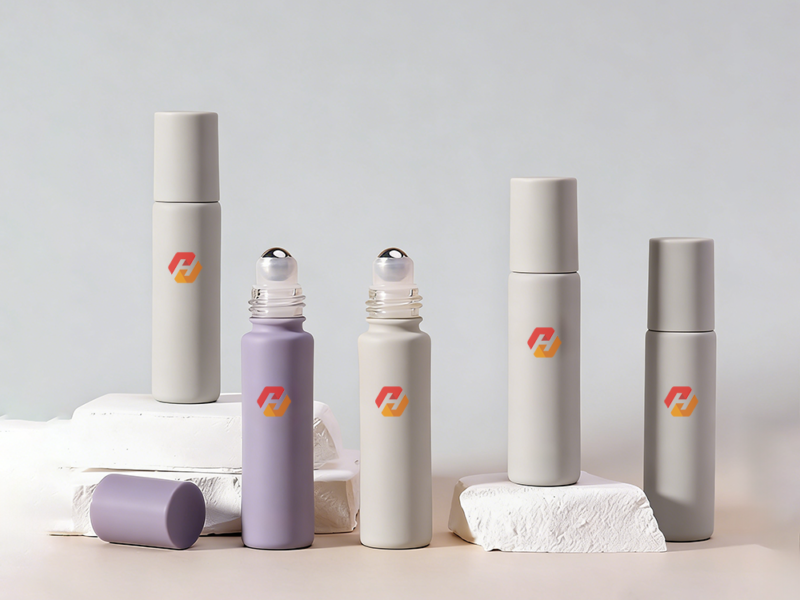
The global fragrance and aromatherapy market has shifted toward high-precision delivery systems. For brands scaling production, “roll on bottle wholesale” is no longer just about finding the lowest unit price. It is about engineering a user experience where the viscosity of the liquid matches the clearance of the roller ball fitment.
As a B2B procurement consultant in the cosmetic packaging industry, I see many brands overlook the technical synergy between the bottle neck finish and the housing assembly. Whether you are launching a boutique essential oil line or a mass-market perfume, your choice of packaging directly impacts shelf life, leak prevention, and brand perception.
The Material Science of Wholesale Glass Roll-On Bottles
Glass remains the industry gold standard for essential oils and premium perfumes. Unlike plastics, glass is chemically inert. This prevents leaching—a critical factor when dealing with volatile aromatic compounds or high concentrations of citrus-based oils.
Soda-Lime vs. Borosilicate
Most wholesale roll-on bottles are manufactured using Type III soda-lime glass. This material offers excellent clarity and structural integrity for standard 5ml and 10ml volumes. For specialized medical-grade applications, borosilicate glass may be used, though it is less common in standard cosmetic retail due to cost-to-benefit ratios.
UV Protection and Light Sensitivity
Essential oils are photosensitive. When sourcing roll-on bottles wholesale, your color selection is a functional decision, not just an aesthetic one:
Amber Glass: Filters out most UV light, offering the highest protection for therapeutic-grade oils.
Frosted Glass: Scatters light and provides a premium tactile feel, reducing the visibility of fingerprints.
Clear Glass: Ideal for colorful perfumes where visual clarity is the primary selling point.
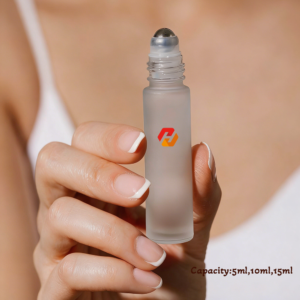
The Mechanics of the Roller Ball Fitment
The “roll-on” experience is defined by the ball and the housing fitment. If the tolerances are too loose, the product leaks; if they are too tight, the ball seizes.
1. Ball Material Selection
-
Stainless Steel: The preferred choice for “cooling” sensations. It is durable, provides a heavy-duty feel, and resists corrosion from most perfume formulations.
-
Glass: Offers a smoother, more “gliding” feel. It is often perceived as the most high-end option for luxury scents.
-
Plastic (PP/PE): A cost-effective solution for mass-market products. It is lightweight but lacks the premium thermal conductivity of metal or glass.
2. Housing and Tension
The plastic “housing” that holds the ball must be manufactured with high precision. During wholesale procurement, you must verify the material is Polypropylene (PP), which provides the necessary flexibility to snap the ball into place while maintaining a liquid-tight seal against the bottle neck.
| Feature | Stainless Steel Ball | Glass Roller Ball | Plastic Roller Ball |
| Tactile Feel | Cold, therapeutic | Smooth, premium | Neutral, standard |
| Durability | Highest | Medium (can chip) | High |
| Chemical Resistance | High | Excellent | Good |
| Cost Profile | Mid-Range | High | Low |
Technical Specifications for Bulk Sourcing
When evaluating a manufacturer like Hyrun Packaging, you must look beyond the photos. Professional B2B buyers focus on the technical drawing and neck finish.
Most standard 10ml roll-on bottles utilize a 16mm neck diameter. However, custom shapes—such as square or thick-walled cylinders—require specialized fitments. You must ensure your supplier performs “vacuum leak testing” on the assembly. This involves placing the filled, capped bottle in a vacuum chamber to simulate the pressure changes of air travel.
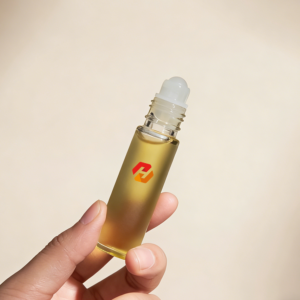
Customization and Surface Treatment
Wholesale orders typically allow for secondary processing. If you are positioning your brand in the luxury sector, consider:
Silk Screen Printing: For durable, high-contrast logos.
Hot Stamping: To add metallic foils (gold/silver) to the glass surface.
Electroplating Caps: To give plastic caps a metallic, weighted finish.
Navigating the Wholesale Supply Chain
Sourcing roll-on bottles in bulk requires a deep understanding of lead times and quality control (QC). A common mistake is failing to account for the “fitment assembly” during the filling process.
Quality Assurance (AQL) Standards
In industrial packaging, you should expect an Acceptable Quality Limit (AQL). Usually, a 1.5 for major defects (leaks) and 4.0 for minor defects (slight scratches) is the industry standard. Always request a pre-shipment sample from the actual mass production run, not just a “golden sample” from a showroom.
Shipping and Palletization
Glass is heavy and fragile. Professional wholesale suppliers will use egg-crate dividers within corrugated boxes to prevent glass-to-glass contact. For large-scale sea freight, palletization with shrink-wrap is essential to prevent shifting, which can cause micro-fractures in the bottle necks.
Matching Product Viscosity to Roller Performance
Not all roll-on bottles are created equal. A “thin” alcohol-based perfume requires a tighter fitment than a “thick” carrier oil like jojoba or coconut oil.
If your formulation is high-viscosity, you may require a larger ball diameter to increase the surface area of the liquid being dispensed. Conversely, for low-viscosity scents, a smaller ball or a more rigid housing is necessary to prevent “over-priming,” where too much liquid escapes during a single stroke.
Why Glass Roll-Ons are the Sustainable Choice
The beauty industry is moving away from single-use plastics. Glass roll-on bottles are highly recyclable and, more importantly, refillable. By choosing high-quality components—like stainless steel balls and thick-walled glass—you encourage your customers to keep the bottle and purchase “refill pouches,” increasing brand loyalty and reducing environmental impact.
FAQ: Professional Roll On Bottle Wholesale
What is the standard MOQ for custom-colored roll-on bottles?
For standard clear or amber glass, MOQs can be as low as 1,000–5,000 units. However, custom colors or unique shapes usually require 10,000 to 20,000 units to justify the machine setup and mold adjustments.
How do I prevent leaking in roll-on bottles?
Leaking is usually caused by a mismatch between the bottle neck inner diameter and the fitment plug. Always source your bottles and fitments from the same manufacturer to ensure the tolerances are matched within ±0.05mm.
Are stainless steel balls better than plastic for essential oils?
Yes. Certain essential oils can degrade specific types of plastic over time, potentially leading to “sticking.” Stainless steel is universally compatible with oils and provides a more professional feel for the end-user.
Can these bottles be used for CBD or medical topicals?
Absolutely. Glass roll-ons are excellent for CBD topicals because they allow for precise, mess-free application. Ensure your supplier provides FDA-compliant material data sheets if you are in the medical or wellness space.
What is the lead time for wholesale orders?
For in-stock items, shipping usually occurs within 7–10 days. For custom-printed or mass-manufactured orders, lead times typically range from 30 to 45 days, depending on the complexity of the decoration.
Reference Sources
-
ISO 12818:2013: Glass packaging — Standard tolerances for neck finishes.
-
ASTM D3475: Standard Classification of Child-Resistant Packages (relevant for certain medicinal roll-on applications).
-
FEVE (The European Container Glass Federation): Guidelines on the recyclability and chemical inertia of container glass.
-
Glass Packaging Institute (GPI): Technical standards for glass container manufacturing and quality control.