
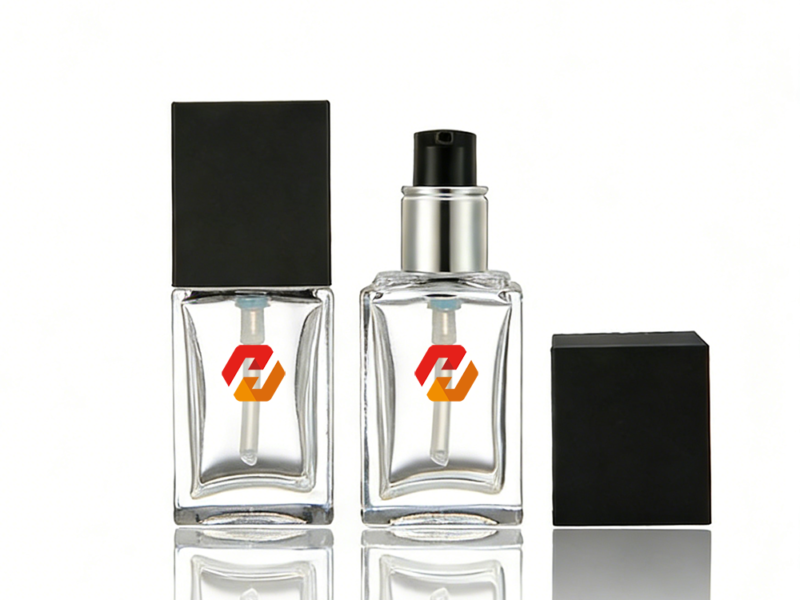
The global beauty market demands a rapid transition from concept to shelf. Choosing a primary packaging partner is the most critical decision for brand owners and procurement managers. For decades, the supply chain has centered on the East.
A cosmetic packaging manufacturer in China offers more than just low-cost labor. These facilities provide integrated engineering, advanced material science, and massive production scalability. Understanding the strategic logic behind this partnership helps brands mitigate risk and improve margins.
Vertical Integration and Supply Chain Efficiency
The primary benefit of working with a Chinese manufacturer is the ecosystem of vertical integration. In manufacturing hubs like Guangdong or Zhejiang, a single supplier often manages the entire lifecycle of a bottle. This includes mold design, injection molding, surface treatment, and final assembly.
Vertical integration minimizes logistical delays between different processing stages. For instance, a brand sourcing cosmetic bottles can have the PET preform produced and the silk-screen printing applied in the same facility. This reduces the risk of transit damage and shortens the total lead time.
Furthermore, proximity to raw material suppliers (PP, PET, Glass, and Acrylic) stabilizes pricing. Chinese manufacturers often maintain long-term contracts with polymer producers. This shielding protects international brands from sudden fluctuations in the global resin market.
Technical Precision in Airless and Dispensing Systems
Modern cosmetic formulas, especially those with active ingredients like Vitamin C or Retinol, require high-performance packaging. China has become a leader in airless pump technology. These systems prevent oxidation by eliminating air contact with the product.
A specialized cosmetic packaging manufacturer in China utilizes high-precision injection molds to ensure airtight seals. Tolerance levels are measured in microns to prevent leakage during high-altitude shipping or temperature changes. Brands can choose from various dispensing volumes to match their specific dosage requirements.
The technical expertise extends to material compatibility. Manufacturers conduct rigorous testing to ensure the inner lining of a bottle does not react with high-pH or oil-based formulas. This engineering-first approach ensures product shelf-life and consumer safety.
Material Innovation and Sustainability Trends
Sustainability is no longer optional in the beauty industry. Chinese manufacturers are at the forefront of the PCR (Post-Consumer Recycled) movement. They offer varying percentages of PCR content (from 10% to 100%) for PET and PP containers.
| Material Type | Sustainability Profile | Common Applications |
| PET | 100% Recyclable, High Clarity | Toners, Cleansers, Serums |
| PCR-PP | Reduced Carbon Footprint | Cream Jars, Lotion Pumps |
| Acrylic | Durable, Luxury Aesthetic | High-end Anti-aging Creams |
| Glass | Infinitely Recyclable, Inert | Essential Oils, Luxury Serums |
Beyond PCR, manufacturers are developing mono-material packaging. These designs use a single type of plastic for the cap, pump, and bottle. This makes the entire unit easier for consumers to recycle without disassembly.
Advanced Decoration and Brand Differentiation
In a competitive retail environment, the “shelf appeal” of a product is determined by its finish. A cosmetic packaging manufacturer in China offers a suite of decoration technologies that are often cost-prohibitive in Western markets.
Key decoration capabilities include:
-
UV Electroplating: Provides a metallic, mirror-like finish for luxury appeal.
-
Frosted Coating: Creates a soft-touch, premium matte texture.
-
Hot Stamping: Applies metallic foils for high-end logos and branding.
-
Water Transfer Printing: Allows for complex patterns and textures across contoured surfaces.
These processes are integrated into the production line. This allows brands to achieve complex aesthetics without significantly increasing the per-unit cost.
Scaling and Manufacturing Flexibility
Startups and established conglomerates have different volume requirements. The Chinese manufacturing landscape is uniquely structured to handle both. Many factories offer “Low MOQ” (Minimum Order Quantity) sections for emerging brands while maintaining the capacity for million-unit runs.
For custom projects, the speed of mold development is a significant advantage. A new custom mold can often be designed, sampled, and approved within 30 to 45 days. This rapid prototyping allows beauty brands to respond to market trends or seasonal demands with extreme agility.
Quality control (QC) systems in top-tier Chinese factories align with international standards. Look for manufacturers holding ISO 9001 or ISO 14001 certifications. These facilities employ automated optical inspection (AOI) to detect surface defects or structural flaws in real-time.
Optimizing Your Procurement Strategy
When selecting a partner like Hyrun, it is essential to evaluate their specific product specialization. For example, their expertise in cosmetic bottles spans from airless systems to luxury glass jars.
To ensure a successful partnership, brands should provide detailed technical specifications (CFA) during the RFQ stage. This includes the formula type, desired capacity, and specific decoration requirements. A transparent manufacturer will provide a clear DFM (Design for Manufacturing) report before production begins.
The focus should always remain on the Total Cost of Ownership (TCO). While unit prices are competitive, the true value lies in the reduction of defects, the reliability of the supply chain, and the ability to scale as the brand grows.
FAQ
What is the typical MOQ when working with a cosmetic packaging manufacturer in China?
MOQs vary by material and customization. Standard stock bottles may have MOQs as low as 3,000 units. Custom-colored or uniquely molded bottles typically require 10,000 to 20,000 units.
How do I ensure the packaging is compatible with my skincare formula?
Always request “naked” samples for compatibility testing. You should fill the containers with your formula and subject them to “oven tests” (accelerated aging) at 45°C for 4–8 weeks to check for reactions or leakage.
What are the standard lead times for mass production?
Standard lead times range from 30 to 45 days after sample approval. If new molds are required, add an additional 30 days for tooling and T1 samples.
How is quality controlled during the manufacturing process?
Reputable manufacturers use a three-stage QC process: Initial production inspection (IPI), during production inspection (DUPRO), and final random inspection (FRI) based on AQL (Acceptable Quality Level) standards.
Can Chinese manufacturers provide eco-friendly packaging certifications?
Yes. Most leading manufacturers provide GRS (Global Recycled Standard) certification for PCR materials. They can also provide FDA or REACH compliance certificates for the raw plastics used.
Reference Sources
-
ISO 9001:2015 – International Standard for Quality Management Systems in Manufacturing.
-
Cosmetics Europe – The Personal Care Association guidelines on primary packaging safety.
-
ASTM D3475 – Standard Classification of Child-Resistant Packages (relevant for specific cosmetic sub-sectors).
-
Sustainable Packaging Coalition (SPC) – Industry standards for PCR and recyclable material usage.
-
SGS/Intertek Reports – Technical whitepapers on plastic migration and chemical compatibility in cosmetic packaging.