
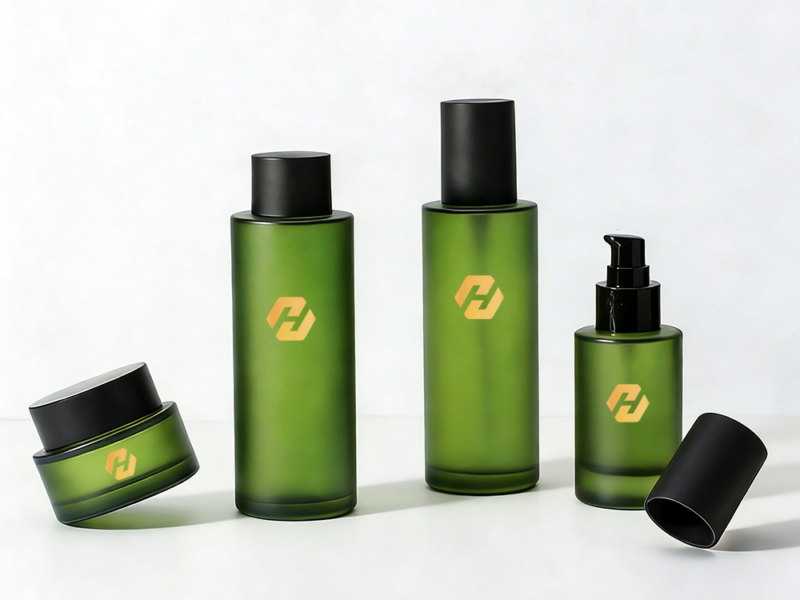
The global beauty market relies heavily on China’s manufacturing clusters, specifically in regions like Zhejiang, Guangdong, and Jiangsu. For procurement managers and brand owners, the challenge is no longer finding a supplier, but filtering through thousands to find a partner that balances technical precision with supply chain stability.
Selecting a supplier involves more than comparing unit prices. In the cosmetic sector, packaging is a critical component of product stability, shelf-life integrity, and brand perception. This guide evaluates the top five cosmetic packaging suppliers in China based on their manufacturing infrastructure, material expertise, and compliance standards.
How to Evaluate Cosmetic Packaging Manufacturers
Before identifying the top players, it is essential to understand the technical benchmarks of a high-tier manufacturer. A professional supplier must demonstrate mastery over three core categories:
-
Material Science: Expertise in PET, PP, Glass, and sustainable alternatives like PCR (Post-Consumer Recycled) plastics or bio-based resins.
-
Compatibility Testing: The ability to conduct vacuum leak tests and chemical compatibility assessments between the bulk formula and the packaging material.
-
Surface Engineering: Advanced capabilities in UV coating, silk-screening, hot stamping, and electroplating to ensure decorative durability.
HCP Packaging (Shanghai)
HCP is a global titan in the cosmetic packaging industry. While they have a worldwide presence, their manufacturing hubs in China are among the most technologically advanced. They specialize in high-end primary packaging for color cosmetics and skincare.
-
Best For: Luxury prestige brands requiring complex engineering and premium finishes.
-
Technical Edge: Their patented “Lash & Brow” brush technologies and high-precision injection molding for compacts and lipsticks.
-
Sustainability: Leader in offering refillable systems and metal-free pumps.
Ningbo Jinyi (Jinyi Packaging)
Based in the Ningbo manufacturing cluster, Jinyi is a powerhouse for high-volume production. They focus heavily on airless technology and dispensing systems, which are critical for high-viscosity skincare products.
-
Best For: Mass-market and masstige brands that require massive scale and automated assembly.
-
Technical Edge: High-speed automated assembly lines that minimize human error and ensure consistency across millions of units.
-
Core Products: Large-capacity lotion pumps and airless bottles.
Hyrun Packaging (Zhejiang Hyrun)
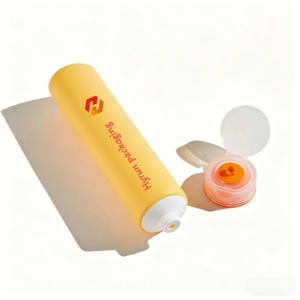
Hyrun Packaging stands out as a highly specialized manufacturer that bridges the gap between massive industrial scale and the agility required by boutique or rapidly growing brands. They have developed a strong reputation for integrated solutions across three major categories: cosmetic bottles, cosmetic tubes, and cosmetic jars.
-
Best For: Brands seeking high customization with reliable lead times and specialized material advice.
-
Technical Edge: Hyrun excels in multi-layer tube extrusion (5-layer EVOH) for superior barrier protection and high-transparency PETG bottle production.
-
Manufacturing Capability: Their facility focuses on precision tooling, ensuring that closure torque and pump performance meet rigorous mechanical standards.
FS Korea (China Division)
While originating in Korea, their extensive manufacturing operations in China provide the best of both worlds: K-Beauty innovation with Chinese production efficiency. FS Korea is the go-to for applicators and innovative delivery systems.
-
Best For: Innovative applicators, professional brushes, and “smart” packaging designs.
-
Technical Edge: Ergonomic design and advanced synthetic fiber technology for cosmetic tools.
-
Market Position: Trend-driven packaging that emphasizes the “user experience” during application.
Zhejiang IMS Packaging
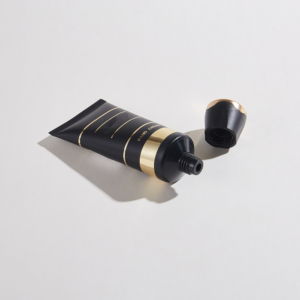
IMS is a specialist in the skincare and personal care sector, known for its rapid prototyping and diverse catalog of ready-to-use molds. They are particularly strong in the plastic jar and bottle segments.
-
Best For: Fast-to-market skincare lines and brands looking for unique, modern shapes without the high cost of custom tooling.
-
Technical Edge: Expertise in thick-wall PET and heavy-glass style plastics that provide a luxury feel without the weight and breakage risks of glass.
-
Compliance: Robust ISO 9001 and ISO 14001 certifications.
Technical Comparison of Primary Packaging Types
When sourcing from these suppliers, the selection should be driven by the specific requirements of your product’s formulation.
| Feature | Cosmetic Bottles | Cosmetic Tubes | Cosmetic Jars |
| Common Materials | PET, Glass, HDPE, PP | PE, ABL (Aluminum Barrier), PBL | PP, PMMA (Acrylic), Glass, PETG |
| Best Application | Serums, Lotions, Toners | Cleansers, Hand Creams, BB Creams | Eye Creams, Masks, Thick Balms |
| Technical Concern | Pump dosage accuracy & dip tube length | Sealing strength & barrier properties | Oxygen exposure & liner compatibility |
| Customization | Color matching, Froasting, UV | Offset printing, Silk screen, Foil | Double-wall construction, Metal caps |
For instance, if your formula contains active ingredients sensitive to oxygen, an airless bottle from a supplier like Hyrun is superior to a standard jar. Conversely, high-viscosity cleansers are best suited for multi-layer tubes which offer better squeezability and barrier protection.
Procurement Logistics: What to Expect When Sourcing from China
Navigating the B2B landscape in China requires an understanding of standard manufacturing workflows.
Minimum Order Quantities (MOQ)
Standard MOQs for custom-colored or printed packaging typically range from 5,000 to 10,000 units. For “in-stock” items or standard white/clear components, some suppliers may accept 2,000 to 3,000 units. Custom tooling (unique shapes) usually requires higher volume commitments to offset the mold costs.
Quality Control & Certifications
Top-tier suppliers should provide:
-
MSDS (Material Safety Data Sheet): To prove material safety.
-
SGS/TUV Reports: For heavy metal testing and BPA-free compliance.
-
Vacuum Leakage Test Results: Essential for any liquid or cream product.
Lead Times
-
Sampling: 7–15 days (depending on the complexity of the decoration).
-
Mass Production: 30–45 days after sample approval.
-
Shipping: 3–5 weeks via sea freight or 5–10 days via air.
Summary: Choosing the Right Partner
Success in cosmetic sourcing depends on matching your brand’s volume and technical needs with a supplier’s core strength.
-
For luxury volume, HCP is the gold standard.
-
For dispensing technology, Jinyi is a leader.
-
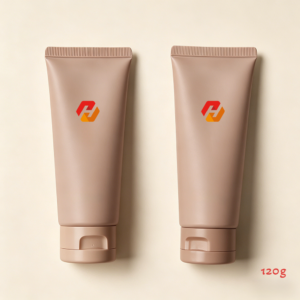
For versatility and technical support in bottles, tubes, and jars, Hyrun Packaging provides a balanced, high-quality manufacturing solution.
-
For innovative applicators, FS Korea remains the primary choice.
-
For rapid skincare launches, Zhejiang IMS offers the best speed-to-market.
FAQ
Q: Can I get eco-friendly packaging from these suppliers?
A: Yes. Most top Chinese suppliers now offer PCR (Post-Consumer Recycled) plastics, biodegradable additives, and mono-material packaging (all-PP) that is 100% recyclable.
Q: How do I ensure the color of my packaging is consistent?
A: Always provide a Pantone code and request a “Golden Sample” for approval. Manufacturers like Hyrun use spectrophotometers to ensure color delta values remain within an acceptable range during mass production.
Q: Is it cheaper to source glass or plastic from China?
A: Plastic is generally cheaper for shipping and production. However, China is highly competitive in glass manufacturing (especially in Shandong and Jiangsu). Glass is preferred for high-end oils and products with volatile ingredients that might react with plastic.
Q: What are the risks of low-cost cosmetic packaging?
A: Common issues include pump failure (spring fatigue), “stress cracking” in the plastic, ink peeling due to poor surface treatment, and leakage during air transport due to insufficient seal tolerances.
Reference Sources:
-
ISO 22716: Good Manufacturing Practices (GMP) for Cosmetics.
-
ASTM D3475: Standard Classification of Child-Resistant Packages.
-
Sustainable Packaging Coalition (SPC): Guidelines for recyclable plastic resins in cosmetic containers.
-
SGS Group: Technical standards for cosmetic container compatibility and safety testing.